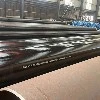
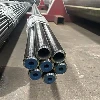
Why Steel Pipe Piles
Steel pipe piles are driven or bored into the ground to carry vertical and lateral loads for bridges, high-rise buildings, ports, marine structures and industrial foundations. Welded steel pipe is the preferred piling product because it offers high axial and bending capacity, predictable driving behaviour, easy splicing and the ability to be filled with concrete or inspected internally. The pile's performance depends on correct specification of diameter, wall, grade and manufacturing process.
Manufacturing Options for Piling Pipe
| Process | Diameter Range | Typical Wall | Piling Use |
|---|---|---|---|
| SSAW (spiral) | 20"-100"+ | 6-25 mm | Large-diameter marine and land piles |
| LSAW | 16"-60" | 8-50 mm | Heavy-duty, thick-wall piles |
| ERW / HFW | 4"-24" | 5-20 mm | Smaller foundation and sheet-pile systems |
Material Grades
Piling pipe is commonly specified in structural carbon steel grades: ASTM A252 Grades 1-3, the dedicated piling standard, ASTM A53 Grade B, API 5L Grade B to X60, and Chinese grades such as Q235B and Q355B. Grade selection balances driving stress, soil conditions and weldability; higher grades allow thinner walls but need harder driving shoes and more careful handling.
Key Specification Parameters
Outside diameter:
chosen from geotechnical capacity and available sizes; larger diameters give more skin friction and moment capacity.
Wall thickness:
sized for axial load, bending, buckling during driving and corrosion allowance.
Length:
single sections typically 6-18 m, spliced by butt welding for deeper penetration.
End finish:
square cut, bevelled or fitted with driving shoes for hard strata.
Tolerances:
OD ±1%, wall per the applicable standard, straightness per piling practice.
Design Considerations
Driving stress:
the pile must resist hammer impact without buckling or yielding at the head.
Corrosion:
add wall allowance or protective coating for marine and aggressive soil environments.
Splicing:
full-penetration butt welds with backing rings ensure continuity of section.
Inspection:
after driving, the pile can be verified by ultrasonic integrity testing or internal camera inspection.
Quality Assurance
Piling pipe is verified by chemical and tensile testing per heat, flattening and bend tests on the weld, 100% ultrasonic inspection of the seam for welded product, and dimensional checks on OD, wall and straightness. The mill certificate documents the heat number and results for full traceability into the foundation record.
Frequently Asked Questions
What is the standard for steel pipe piles?
ASTM A252 is the dedicated piling standard; other accepted materials include ASTM A53, API 5L and structural grades such as Q355B.
Which is better for piling, SSAW or LSAW?
Both work; SSAW dominates large diameters at lower cost, while LSAW offers thicker walls and a straight seam for the heaviest driving conditions.
How is wall thickness selected for a pipe pile?
By the axial and bending loads, driving stresses and an added corrosion allowance; geotechnical and structural design determine the final number.
Can pipe piles be inspected after driving?
Yes, with low-strain or cross-hole ultrasonic integrity testing, and by internal camera inspection on large-diameter open-ended piles.
Do pipe piles need corrosion protection?
In marine, tidal and aggressive soils, yes: coating, cathodic protection or extra wall thickness is specified for the design life.
How are long piles made?
By splicing shorter sections with full-penetration field butt welds, keeping the section continuous through the splice.