




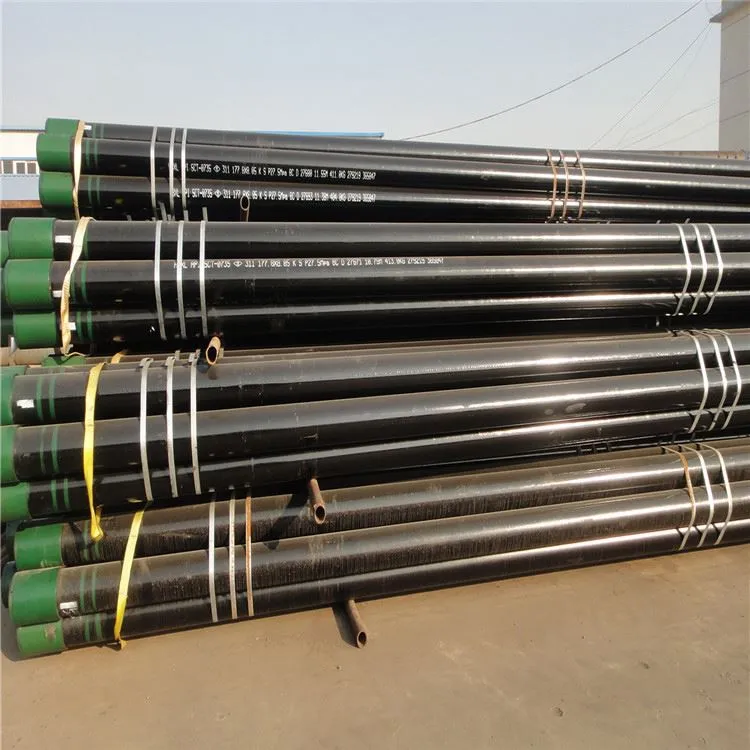

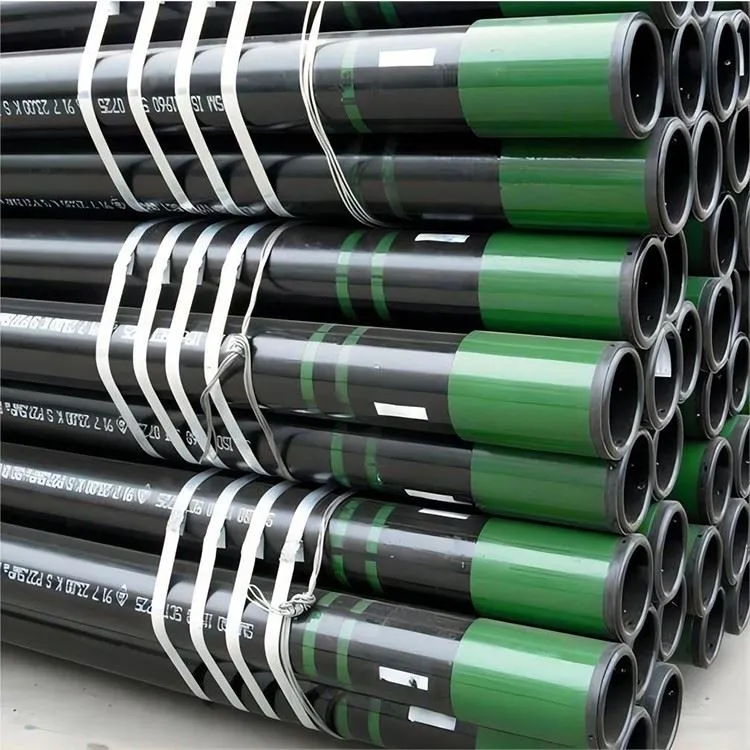
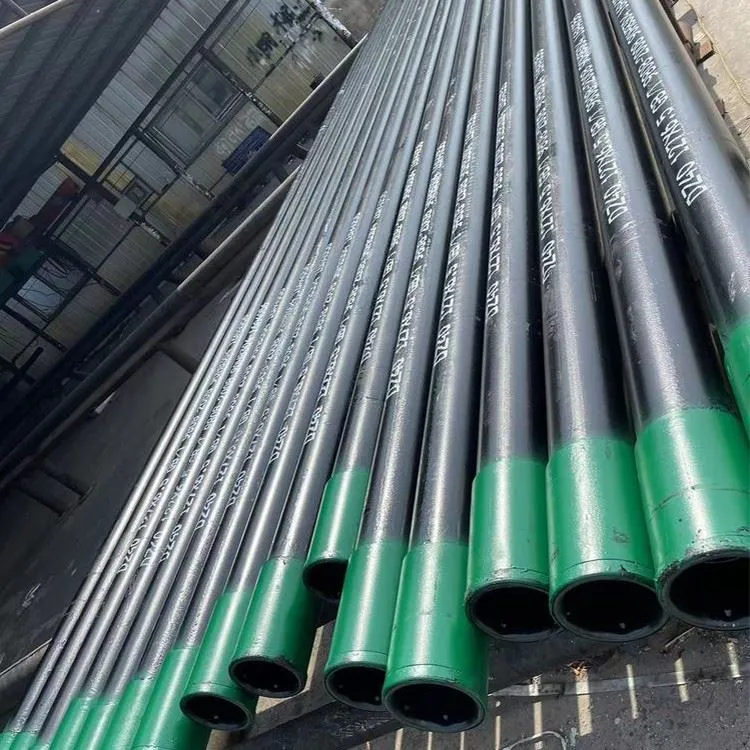
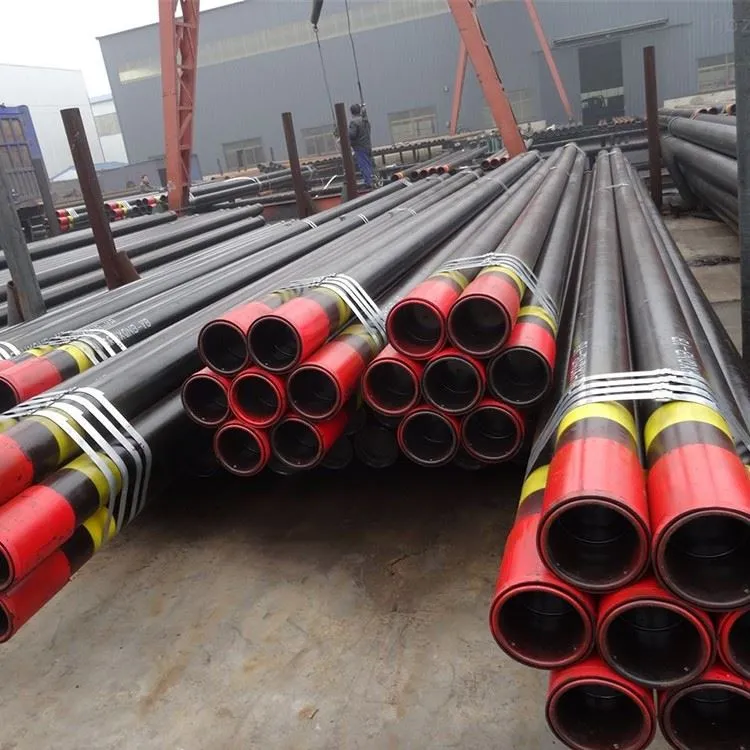
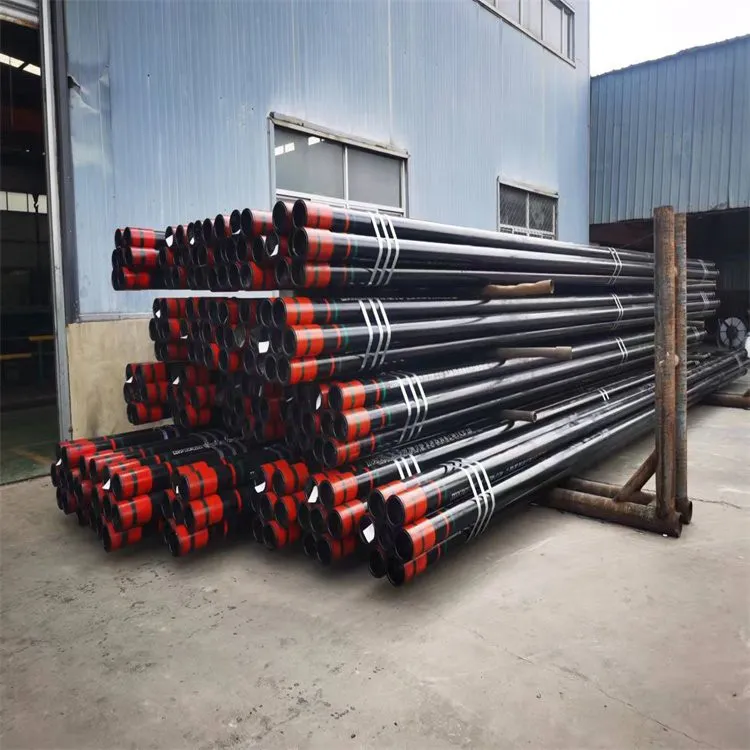
API 5CT R95 Casing And Tubing
What is API 5CT R95 Casing and Tubing?
API 5CT R95 is a steel grade with a minimum yield strength of 95,000 psi.
Key Feature: R95 must undergo full-length heat treatment (Quenching and Tempering), ensuring superior mechanical consistency compared to N80.
Application: It is primarily used in medium-to-deep oil and gas wells with high-pressure environments. While it is not specifically a "sour service" grade like C90 or T95, its controlled hardness and high strength make it excellent for challenging formations.
API 5CT R95 Specification Table
| Item | Description |
| Standard | API Spec 5CT / ISO 11960 |
| Steel Grade | R95 |
| Color Identification | Brown band + Blue band |
| Manufacturing Process | Seamless (SMLS) or Electric Welded (EW) |
| Heat Treatment | Full-length Quenched & Tempered (Q+T) |
| Surface Treatment | Black painting, Phosphating, Anti-corrosion oil, or Bare pipe |
| Thread Protectors | Steel or Plastic-Steel Composite Protectors |
Chemical Composition of API 5CT R95 (%)
API standards do not impose extremely rigid specific limits on the chemical composition of R95 (compared to restricted grades like C90/T95); however, Phosphorus (P) and Sulfur (S) are strictly controlled to ensure high steel purity and material consistency.
| Steel Grade | C (max) | Mn (max) | Mo (max) | Cr (max) | P (max) | S (max) | Cu (max) |
| R95 | 0.45 | 1.90 | 0.50 | 1.50 | 0.020 | 0.010 | 0.35 |
Tensile Properties of API 5CT R95 casing and tubing
| Parameter | Value (Imperial - psi) | Value (Metric - MPa) |
| Yield Strength Range | 95,000 – 110,000 | 655 – 758 |
| Tensile Strength (min) | 105,000 | 724 |
| Hardness (HRC) | Record & Report (Typically ≤ 26 HRC) | Ensures toughness and resistance to brittleness |
| Elongation | Calculated based on cross-sectional area | Ensures good ductility |
API 5CT R95 Tubing Dimensions and Sizes
R95 tubing is typically used for the production string. Common connections include EUE (External Upset) and NUE (Non-Upset).
| Nominal Size (Inches) | Outside Diameter (OD - mm) | Nominal Weight (lb/ft) | Wall Thickness (mm) | Internal Diameter (mm) |
| 2-3/8" | 60.32 | 4.70 | 4.83 | 50.66 |
| 2-7/8" | 73.02 | 6.50 | 5.51 | 62.00 |
| 3-1/2" | 88.90 | 9.30 | 6.45 | 76.00 |
| 4" | 101.60 | 11.00 | 6.65 | 88.30 |
| 4-1/2" | 114.30 | 12.75 | 7.37 | 99.56 |
API 5CT R95 Casing Dimensions and Sizes
R95 casing is used to line the wellbore. Common connections include STC (Short Round), LTC (Long Round), and BTC (Buttress Thread).
| Nominal Size (Inches) | Outside Diameter (OD - mm) | Nominal Weight (lb/ft) | Wall Thickness (mm) | Internal Diameter (mm) |
| 4-1/2" | 114.30 | 11.60 | 6.35 | 101.60 |
| 5" | 127.00 | 15.00 | 7.52 | 111.96 |
| 5-1/2" | 139.70 | 17.00 | 7.72 | 124.26 |
| 6-5/8" | 168.28 | 24.00 | 8.94 | 150.40 |
| 7" | 177.80 | 23.00 | 8.05 | 161.70 |
| 7" | 177.80 | 29.00 | 10.36 | 157.08 |
| 8-5/8" | 219.08 | 32.00 | 8.94 | 201.20 |
| 9-5/8" | 244.48 | 40.00 | 10.03 | 224.42 |
| 10-3/4" | 273.05 | 45.50 | 10.16 | 252.73 |
| 13-3/8" | 339.72 | 68.00 | 12.19 | 315.34 |
| 20" | 508.00 | 94.00 | 11.13 | 485.74 |
Test and Inspection of API 5CT R95 Tubing and Casing
To ensure safety in high-pressure environments, GNEE R95 pipes undergo the following rigorous inspections:
Hydrostatic Test: 100% of pipes are tested to ensure no leakage under the specified pressure.
NDT (Non-Destructive Testing): Includes Ultrasonic Testing (UT), Magnetic Particle Inspection (MPI), or Eddy Current Testing to detect internal and surface defects.
Flattening Test: Verifies the ductility of the pipe and the strength of the weld (for EW pipes).
Charpy V-Notch Impact Test: Tests the material's toughness under low temperature or high-impact conditions.
Hardness Test: Essential for R95 to confirm the Q+T process achieved the correct metallurgical structure.
Thread Gauging: 100% inspection using API-certified gauges to ensure perfect connectivity.

API 5CT R95 OCTG Factory

FAQ
What is the Difference between API 5CT R95 Casing and Tubing?
The main difference between API 5CT R95 Casing and Tubing lies in their function, size, and connection types, even though they share the same high-strength steel grade (95,000 psi yield strength).
| Feature | R95 Casing | R95 Tubing |
| Primary Role | Structure: Lines the wellbore to prevent collapse and protect groundwater. | Production: Placed inside the casing to transport oil or gas to the surface. |
| Size (OD) | Larger: Generally 4-1/2" to 20". | Smaller: Generally 2-3/8" to 4-1/2". |
| Connections | Commonly STC, LTC, or BTC (Buttress). | Commonly EUE (External Upset) or NUE. |
| Placement | Permanent; cemented into the well. | Removable; used for production or injection. |
What is the difference between API 5CT T95 and R95?
While both T95 and R95 share the same yield strength (95,000 psi), they are designed for very different operating environments.
| Feature | R95 | T95 |
| Yield Strength | 95,000 psi | 95,000 psi |
| Primary Use | Deep wells, High-pressure environments | Sour / Corrosive (H2S) Environments |
| Corrosion Resistance | None specific | Very High (SSC Resistant) |
| Hardness Limit | Flexible | Strictly Controlled (Max HRC) |
| Price | Moderate (Excellent Value) | High |
Hot Tags: api 5ct r95 casing and tubing, China api 5ct r95 casing and tubing manufacturers, suppliers, factory, octg intermediate weight drill pipes, octg maintenance, octg custom orders, octg certification, octg subs, octg heavy weight drill pipes
You Might Also Like


Send Inquiry