





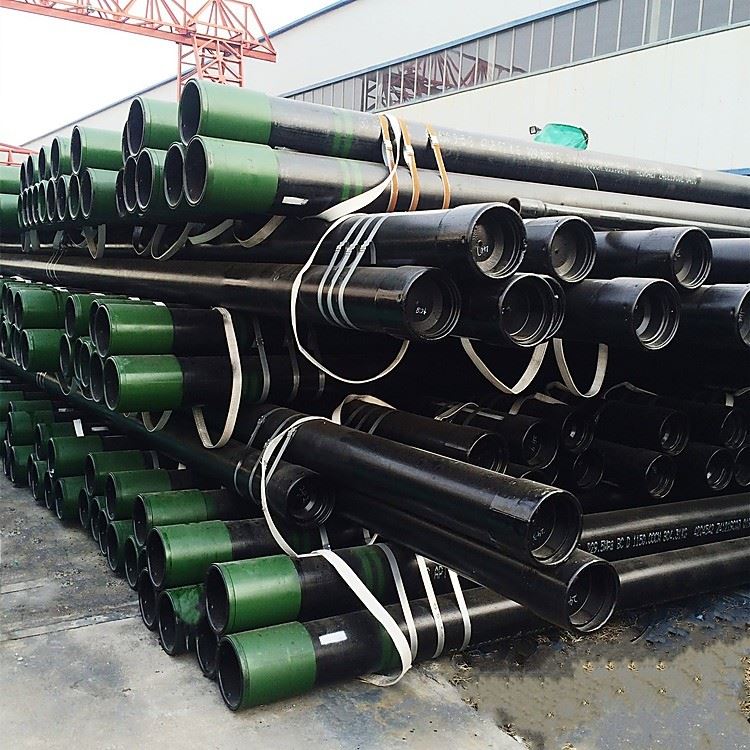
Intermediate Casing
What Is Intermediate Casing? The Problem-Formation Barrier
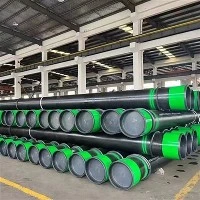
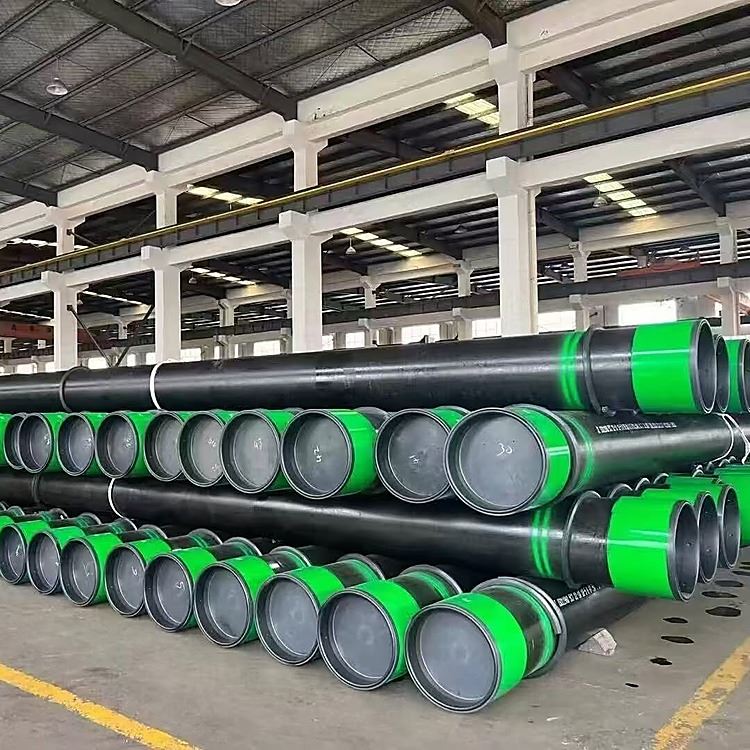
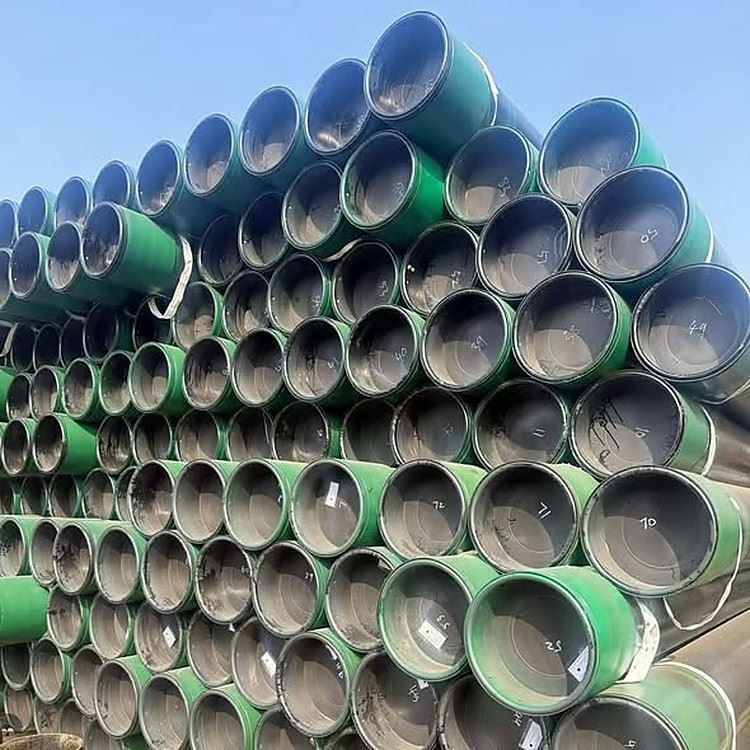
What is intermediate casing? It is a string of large-diameter steel pipe, cemented in place between the surface casing and the production casing, whose job is to isolate formations that make further drilling unsafe. It does not produce hydrocarbons and it does not protect freshwater - those are the jobs of the production and surface strings. Its purpose is to let the driller raise mud weight, change fluid type or drill through salt and unstable shale after the weaker rocks above have been cased off.
Intermediate Casing Pipe in the Casing Programme
An intermediate casing pipe string is run after the surface hole is drilled and cemented, and before the production section. The sequence is: drill to the planned depth, run the string, cement it with returns to surface or to a required height above the previous shoe, pressure-test the casing and cement job, drill out the float equipment, and continue into the next section. Each string narrows the hole, so the size is chosen to pass the casing above and still leave drift for the string below.
Oil and Gas Casing: Where the Intermediate String Fits
Within the family of oil and gas casing, the intermediate string is the problem-solver. Surface casing protects shallow aquifers and supports the wellhead; production casing reaches the reservoir and houses the completion; the intermediate string sits between them and isolates high-pressure, lost-circulation, unstable or sour intervals so that the deeper section can be drilled safely. On K55 casing and N80 oilfield casing programmes it is the most common high-load string.
API 5CT Intermediate Casing: Consolidated Specification
| Field | Specification / option |
|---|---|
| Product | Intermediate casing (technical casing) string |
| Standard | API Spec 5CT / ISO 11960; thread to API Spec 5B; ratings per API 5C3 |
| Sizes | 7, 7-5/8, 8-5/8, 9-5/8, 10-3/4, 13-3/8 in |
| Typical size | 9-5/8 in (244.48 mm), 36.0-53.5 lb/ft |
| Grades | K55, N80-1/Q, L80 Type 1, C90, T95, P110, Q125 |
| Sour service | L80 Type 1 / C90 / T95 to NACE MR0175 / ISO 15156 |
| Connections | STC, LTC, BTC; premium metal-to-metal seal for HPHT |
| Length range | R1 6.10-7.32 m; R2 7.32-8.53 m; R3 9.75-10.36 m |
| Drift | Per API 5CT drift mandrel for the selected weight |
| Setting depth | Typically 1,000-3,000 m onshore; deeper in complex wells |
| Certificates | EN 10204 3.1 (3.2 on request); API 5CT monogram evidence |
Consolidated selection reference only. Confirm every line against the current edition of API Spec 5CT / ISO 11960, API 5C3 and the approved well programme before placing an order.
Intermediate Casing Sizes and Intermediate Casing Depth
Intermediate casing sizes are chosen from the outside-diameter sequence between the surface and production strings. A size must pass through the casing already set above it and leave enough inside diameter for the bit, tools and the next casing string. The main published diameters are 13-3/8, 10-3/4, 9-5/8, 8-5/8, 7-5/8 and 7 in; 9-5/8 in is the most widely ordered.
| Size (in) | OD (mm) | Typical role | Typical use |
|---|---|---|---|
| 13-3/8 | 339.73 | First intermediate string in a deep well | Deep onshore / shelf wells |
| 10-3/4 | 273.05 | Intermediate string below 13-3/8 | Multi-string programmes |
| 9-5/8 | 244.48 | Standard intermediate string | Most onshore and shelf wells |
| 8-5/8 | 219.08 | Smaller intermediate string | Narrower hole design |
| 7-5/8 | 193.68 | Deeper intermediate section | Deep or deviated wells |
| 7 | 177.80 | Deep intermediate or liner | Deep sections / liners |
Intermediate casing depth is set by geology, not by a catalogue table. Onshore conventional wells commonly set the shoe between 1,000 and 3,000 m; deep and ultra-deep wells may run 3,000 to 5,000 m or more, and offshore depth varies with water depth and pressure regimes. The shoe must be below the last hazard that cannot be drilled through with the mud weight the upper casing can withstand, and the cement top is verified before the float equipment is drilled out.
Setting depths are indicative ranges from published well-construction references. Final depth, cement top and pressure test follow the approved casing programme and the applicable regulator.
9-5/8 Casing: the Workhorse Intermediate Size
For most wells the choice is 9-5/8 casing. At 244.48 mm outside diameter it fits inside a 13-3/8 in surface string and leaves a workable bore for a 7 in production string. API 5CT lists it in several nominal weights; the weight selected fixes the wall, the inside diameter and the drift, and therefore the size of bit and tools that can pass.
Casing Collapse and Burst: Sizing the Three Loads First
Before a grade is named, the string is checked against three independent failure modes. Casing collapse and burst describe the two pressure directions, and axial tension describes the hanging load. Collapse is inward failure when formation pressure outside the pipe exceeds the pressure inside it; burst is outward failure when internal pressure from a kick or pressure test exceeds the external support; tension is the weight of the suspended string plus overpull and thermal stress. One size, one weight and one grade must satisfy all three at once.
| Load case | Driving condition | Typical design factor | What it controls |
|---|---|---|---|
| Collapse | Fluid level drop, well-control event, lost circulation | 1.0 - 1.25 | Wall thickness and grade |
| Burst | Kick, pressure test, high internal pressure | 1.0 - 1.25 | Wall thickness and grade |
| Axial tension | Hanging weight, overpull, thermal stress | 1.6 - 2.0 | Body yield and joint strength |
| Joint strength | Make-up and axial load at the connection | Per connection rating | Connection type |
| Drift | Bit, packer and logging tools for next section | Minimum guaranteed bore | Chosen nominal weight |
Design factors are indicative ranges from published well-construction references. Final factors and ratings follow the operator's design standard and the approved casing programme.
The pipe-body ratings below were calculated to API 5C3 / ISO 10400. Burst uses the Barlow form with the 0.875 factor that accounts for the minimum wall tolerance; collapse selects the yield, plastic, transition or elastic equation according to the D/t ratio. Values assume zero axial load, so the connection rating must be checked separately.
| Nominal weight (lb/ft) | L80 / N80 burst (psi) | L80 / N80 collapse (psi) | T95 burst (psi) | T95 collapse (psi) | P110 burst (psi) | P110 collapse (psi) |
|---|---|---|---|---|---|---|
| 40 | 5,750 | 3,090 | 6,820 | 3,330 | 7,900 | 3,470 |
| 43.5 | 6,330 | 3,810 | 7,510 | 4,130 | 8,700 | 4,420 |
| 47 | 6,870 | 4,760 | 8,150 | 5,090 | 9,440 | 5,300 |
| 53.5 | 7,930 | 6,620 | 9,410 | 7,340 | 10,900 | 7,950 |
Pipe-body ratings at zero axial load, nominal wall and published minimum yield. Connection joint strength and leak resistance are often lower and must be read from the connection data sheet. Recalculate with API 5C3 / ISO 10400 for the exact size, weight, grade and connection ordered.
Two observations guide weight selection. At 47 lb/ft, raising the grade from 80 to 110 ksi moves burst from 6,870 to 9,440 psi - about 38% - but collapse only from 4,760 to 5,300 psi, about 11%. Thin-wall pipe sits near the elastic collapse regime where geometry dominates, so adding wall at a lower grade often buys more collapse resistance than stepping up grade at the same weight. A published Q125 figure for the same line is about 10,730 psi burst and 5,630 psi collapse.
The collapse column also assumes no pull on the pipe. In a long hanging string the upper joints carry tension, and API 5C3 applies a reduced effective yield strength under axial stress, which lowers collapse resistance higher in the hole. Treat the table as a shortlist of candidate weights; a biaxial or triaxial check with the planned tension, burst, collapse and bending loads must be run before grade and weight are fixed.
Intermediate Casing Dimensions: Weight, Wall, ID and Drift
A line such as 9-5/8 in 47 lb/ft reads as outside diameter 9-5/8 in and nominal weight 47 pounds per foot. The nominal weight is a label for wall thickness, not a scale reading. It is the single most important dimension on the order, because every bore dimension follows from it.
| Nominal weight (lb/ft) | kg/m | Wall (mm) | Nominal ID (mm) | Drift (mm) | Typical duty |
|---|---|---|---|---|---|
| 36.0 | 53.57 | 8.94 | 226.6 | 222.6 | Light intermediate string |
| 40.0 | 59.53 | 10.03 | 224.4 | 220.4 | General intermediate casing |
| 43.5 | 64.74 | 11.05 | 222.4 | 218.4 | Higher collapse, same OD |
| 47.0 | 69.95 | 11.99 | 220.5 | 216.5 | Deep intermediate, higher bending |
| 53.5 | 79.62 | 13.84 | 216.8 | 212.8 | Maximum collapse and burst |
Representative API 5CT values for 9-5/8 in. Drift is the minimum bore a gauge mandrel must pass and is smaller than nominal ID by about 0.156 in (4 mm) at this size. Confirm the exact weight, grade and drift mandrel against the current standard edition and the approved design.
API 5CT Intermediate Casing: Chemical Composition
For general-purpose casing grades, API Spec 5CT / ISO 11960 controls mechanical properties and heat treatment more tightly than a single fixed chemistry, so the mill certificate for the delivered heat is the controlling document. The ranges below are typical values used for material selection and are cross-checked against independent technical references.
| Grade | C | Mn | P max | S max | Si | Others |
|---|---|---|---|---|---|---|
| J55 / K55 | 0.34-0.39 | 1.20-1.50 | 0.030 | 0.030 | 0.20-0.35 | Cu/Ni/Cr residual |
| N80-1 / Q | 0.34-0.38 | 1.45-1.70 | 0.030 | 0.030 | 0.20-0.35 | Cr, Ni, Cu each <= 0.15 |
| L80 Type 1 | 0.34-0.44 | 0.40-0.70 | 0.020 | 0.030 | 0.20-0.35 | Cr 0.80-1.10 |
| P110 | 0.26-0.35 | 1.15-1.55 | 0.020 | 0.010 | 0.20-0.35 | Cr, Ni, Cu residual |
Typical mill chemistry for guidance only. Sour-service grades add chemistry and hardness limits under NACE MR0175 / ISO 15156; always use the certificate for the actual heat.
Intermediate Casing Grades and Minimum Mechanical Properties
Intermediate casing grades are selected by depth, pressure and corrosion, not by price per tonne. Yield strength sets the baseline, but the delivered rating also depends on the nominal weight and the connection. K55 and N80 cover most medium-depth strings; L80 and higher control hardness for sour service; P110 and Q125 serve deep, high-pressure wells.
| Grade | Yield min | Yield max | Tensile min | Typical intermediate duty |
|---|---|---|---|---|
| K55 | 379 MPa / 55 ksi | 552 MPa / 80 ksi | 655 MPa / 95 ksi | Moderate loads |
| N80-1 / Q | 552 MPa / 80 ksi | 758 MPa / 110 ksi | 689 MPa / 100 ksi | General workhorse |
| L80 Type 1 | 552 MPa / 80 ksi | 655 MPa / 95 ksi | 655 MPa / 95 ksi | Sour (H2S) service |
| C90 | 621 MPa / 90 ksi | 724 MPa / 105 ksi | 689 MPa / 100 ksi | Sour service |
| T95 | 655 MPa / 95 ksi | 758 MPa / 110 ksi | 724 MPa / 105 ksi | High-strength sour |
| P110 | 758 MPa / 110 ksi | 965 MPa / 140 ksi | 862 MPa / 125 ksi | Deep, high pressure |
| Q125 | 862 MPa / 125 ksi | 1034 MPa / 150 ksi | 931 MPa / 135 ksi | Ultra-deep, extreme load |
Published minima for selection guidance. Burst, collapse and joint strength must be checked with API 5C3 for the ordered size, weight and grade; grade alone does not define the rating.
For sour intervals, specify L80 Type 1, T95 or C90 with conformity to NACE MR0175 / ISO 15156 and state the hardness limit on the certificate. The N80 oilfield casing and J55 drilling casing pages show the same grade logic at the general-duty end, while Q125 casing covers the highest-load wells.
Casing Connections: STC, LTC, BTC and Premium
Casing connections determine joint strength and running envelope, not the pipe body alone. For intermediate casing the choice is between the basic API 5B thread types and a licensed premium connection. The connection must appear on the order line because it changes the make-up torque, the joint strength and the clearance through the casing above.
| Connection | Thread form | Strength / seal | Typical use |
|---|---|---|---|
| STC | Short round thread, API 5B | Basic joint strength | Shallower, moderate-duty strings |
| LTC | Long round thread, API 5B | Higher joint strength than STC | General intermediate casing |
| BTC | Buttress thread, API 5B | High joint strength in larger sizes | Widely used on 9-5/8 and larger |
| Premium | Licensed metal-to-metal seal | Gas-tight, high combined load | HPHT, gas wells, sour service |
Joint strength and make-up torque depend on grade, weight and connection together. Confirm the current API 5B or premium-connection specification and the gauging records for the delivered lot.
The Intermediate Casing String and the Intermediate Casing Liner Option
A full intermediate casing string returns to surface and is cemented over its full length. An intermediate casing liner is the alternative: a shorter string hung from the previous casing shoe that provides the same isolation without running steel through the upper hole. It saves steel and rig time, but it requires a liner hanger, a defined overlap and a verified seal at the top. The choice depends on whether the upper section must be protected for future access or pressure integrity.
Well Casing Design: Dimensional Tolerances and Inspection
In well casing design the nominal dimensions on a catalogue are not the acceptance limits. Tolerances decide the minimum wall that must carry collapse load and the minimum bore that a tool must pass. They should be read together with the certificate and the inspection plan for the delivered heat.
| Item | Typical control / check |
|---|---|
| Outside diameter | API 5CT tolerance band for the stated size |
| Wall thickness | 0 to -12.5% of nominal wall (API 5CT) |
| Drift | Full-length pass of the applicable API drift mandrel |
| Length | R1 / R2 / R3 range as ordered |
| Thread form | API 5B gauge (lead, taper, height) accepted |
| Straightness | Within the limits of the applicable standard edition |
| Hydrostatic test | Mill test to the standard for the grade and size |
| Marking / traceability | Heat number, grade, size, connection and monogram evidence |
Values shown are common API controls for guidance. The applicable standard edition, product specification level and approved inspection plan set the acceptance limits for a delivered order.
How to Specify Oil and Gas Casing for an Intermediate String
A clear oil and gas casing enquiry for an intermediate string states the outside diameter, nominal weight or wall, grade, connection, length range, setting depth and quantity, plus the standard edition and any sour-service condition. Because collapse and drift pull in opposite directions - a heavier wall raises collapse but reduces drift - the weight must be confirmed before tools for the next section are ordered.
Ask for a mill test certificate to EN 10204 3.1 (3.2 when agreed), API 5CT / ISO 11960 and API 5B evidence, drift and dimensional records, hydrostatic test results and thread gauging tied to the delivered heat. For sour intervals, require conformity to NACE MR0175 / ISO 15156 with the hardness limits stated on the certificate.
Casing Pipe test and inspection
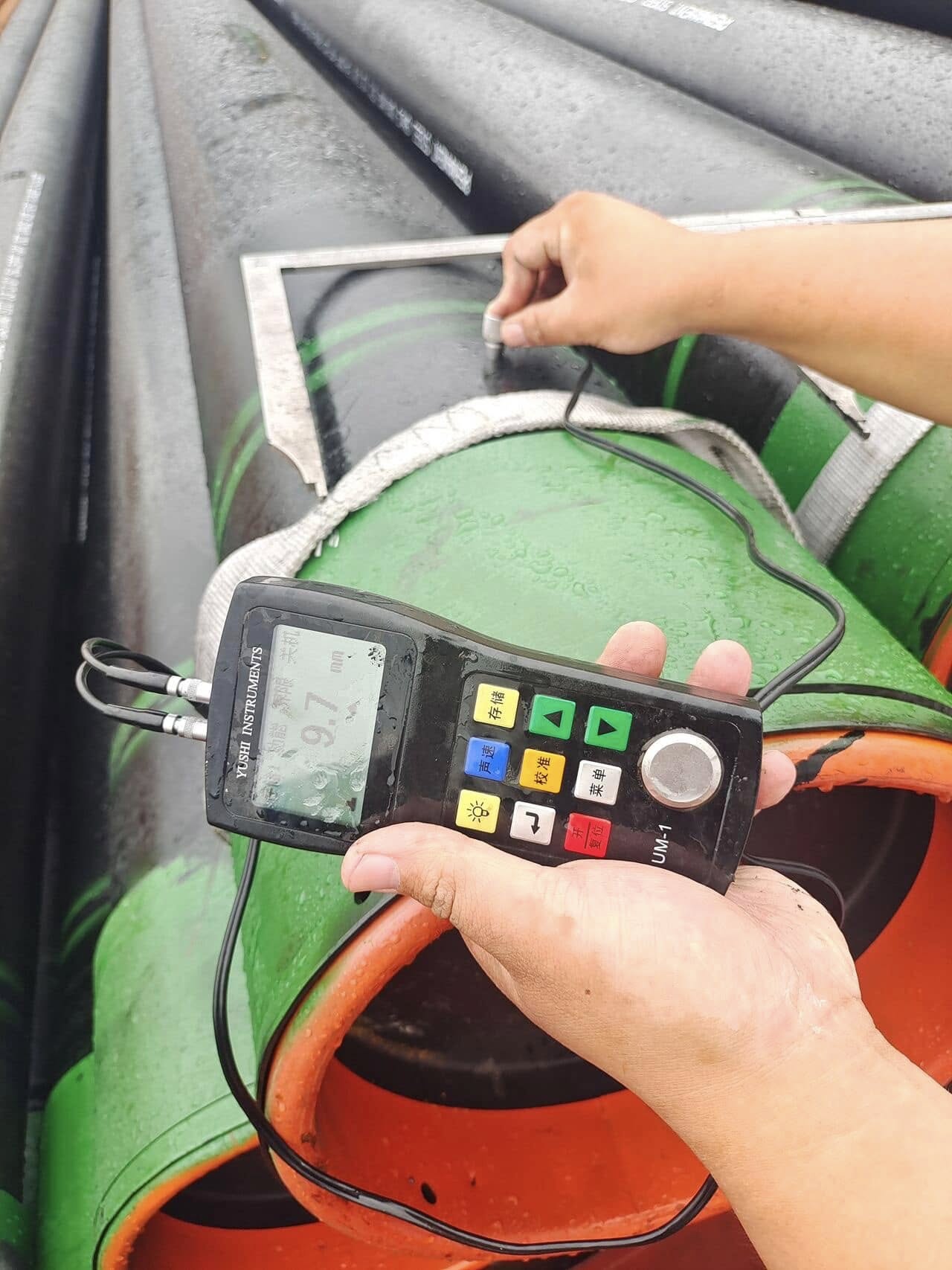
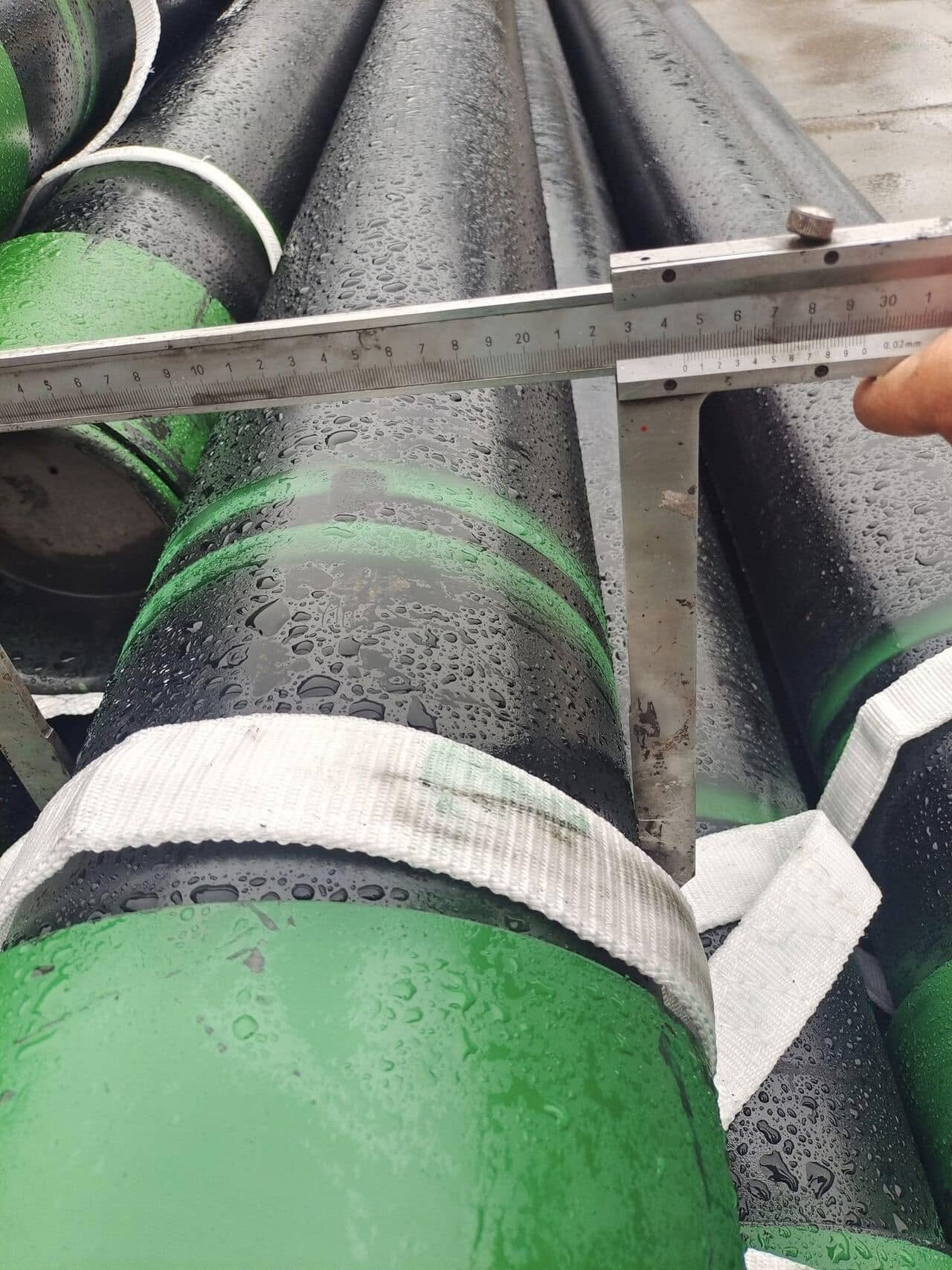
If you have the size, nominal weight, grade, connection and setting depth for your intermediate string, send them with the quantity and destination. A quotation can then be built against the exact API 5CT / ISO 11960 line - including the connection, drift and sour-service requirements - instead of a generic catalogue price, and the certificate scope can be confirmed before the order is placed.
Get an Intermediate Casing Quotation
View OCTG casing products
API 5CT Grade N80 Type Q Casing Steel Pipes
P110 SS PSL 2 R3 SMLS Casing Premium Connection
FAQ
Where is an intermediate casing string set in the well?
It is set below the surface casing shoe and above the production interval, after the bit has drilled through the troublesome formations that forced the string to be run. A typical onshore intermediate casing depth is 1,000 to 3,000 m, and deep or ultra-deep wells may run 3,000 to 5,000 m or more. The exact depth is a well-design decision: the shoe must be deep enough to isolate every hazard in the open section, and the cement is usually returned to surface or to a required height above the previous casing shoe.
Is an intermediate casing always required in a well?
No. If the geology is simple and the section from the surface casing shoe to the target can be drilled safely with one mud weight, no intermediate string is needed. It becomes necessary when a lost-circulation zone, unstable shale, creeping salt, abnormal pore pressure or an H2S-bearing interval appears. Complex wells may need two or three intermediate strings, and deepwater wells with several pressure windows commonly do.
Which size is most often used as intermediate casing?
9-5/8 in (244.48 mm) is the most widely used intermediate casing size on land and shelf wells. It sits between the 13-3/8 in surface string and the 7 in production string, and its inside diameter and drift decide which bit and tools can drill the next section. Common alternatives are 13-3/8, 10-3/4, 8-5/8, 7-5/8 and 7 in, selected so the string passes through the casing above and leaves enough clearance for the string below.
How is the nominal weight of a 9-5/8 casing line chosen?
For a fixed outside diameter, the nominal weight in lb/ft fixes the wall thickness, and the wall thickness then fixes the nominal inside diameter and the drift. A 9-5/8 casing at 36.0 lb/ft has a wall near 8.94 mm and a drift near 222.6 mm, while a 53.5 lb/ft line has a wall near 13.84 mm and a drift near 212.8 mm. Choose the weight from the collapse and burst loads first, then check that the resulting drift still passes the bit, packer and logging tools for the next section.
What grades are typical for an intermediate string?
K55 suits moderate loads, N80 is the general workhorse, and P110 is used for deep, high-pressure sections. Where H2S is expected, a hardness-controlled grade such as L80 Type 1, C90 or T95 with conformity to NACE MR0175 / ISO 15156 is required; Q125 or a non-API grade may be specified for very high collapse or burst. The grade must be checked together with the nominal weight, because the rating comes from both.
Why does collapse often govern an intermediate casing design?
Collapse is the inward failure caused by external formation pressure exceeding internal pressure, for example when the fluid level falls during a well-control event or lost circulation. Because the intermediate string is long and may be run empty or with a low fluid level, external pressure can be high while internal support is low. Burst from a kick or pressure test and axial tension from the hanging weight must be checked at the same time; engineers usually apply design factors of about 1.0 to 1.25 on collapse and burst and 1.6 to 2.0 on body-yield tension.
What is an intermediate liner and when is it used instead of a full string?
An intermediate liner is a shorter string that hangs from a hanger inside the previous casing and does not return to surface. It provides the same formation-isolation function as a full intermediate casing string but saves steel, because the upper section of hole is already protected. It is chosen when a full string is not needed for well control or when cost and rig time matter. The liner hanger, overlap and seal must be included in the well design.
What connection should an intermediate casing string specify?
STC and LTC are the basic API 5B types, and BTC is widely used on intermediate casing for its higher joint strength in larger sizes. Where the string will see high pressure, high temperature, gas-tight requirements or high combined loads, a licensed premium metal-to-metal-seal connection is specified instead. The connection choice must be stated on the order line, because joint strength and running envelope depend on it rather than on the pipe body alone.
Hot Tags: intermediate casing, China intermediate casing manufacturers, suppliers, factory, casing pipes, octg coating, octg finishing, octg for deviated wells, octg protectors, octg with high strength
Previous
API 5CT Casing PipeNext
EUE TubingYou Might Also Like


Send Inquiry