


Selecting the right API casing is not a matter of preference; it is a technical requirement dictated by your Well Design (Drilling Program). Buying the wrong size or specification can lead to catastrophic well failure or expensive delays.
Simplify your procurement. Download our "OCTG Buying Checklist & Grade Comparison Chart" to ensure no detail is missed.
Check the "Casing Tally" or "Drilling Program"
Every drilling project has a technical document created by a Drilling Engineer. You should never buy casing without seeing the Casing Specification Sheet. It will tell you the exact combination of the following factors:
The "Big Five" Specifications (The RFQ Essentials)
When you ask a supplier for a quote, you must provide all five of these parameters. If one is missing, the size is incomplete.
A. Outside Diameter (OD)
This is the physical size (e.g., 9-5/8").
How to know: It is determined by the hole size drilled and the "Drift" (clearance) needed for the next string of pipe or tools to pass through.
Common Progression: 13-3/8" (Surface) → 9-5/8" (Intermediate) → 5-1/2" (Production).
B. Nominal Weight (lb/ft)
This represents the wall thickness. For example, 9-5/8" casing comes in 36.0, 40.0, 43.5, 47.0, or 53.5 lb/ft.
How to know: Heavier weights have thicker walls. You buy heavier pipe if the engineer expects high collapse pressure (from the earth) or burst pressure (from the oil/gas).
C. Steel Grade (API 5CT)
This determines the strength and chemical resistance.
Standard (J55/K55/N80): For routine, non-corrosive wells.
Sour Service (L80/C90/T95): Mandatory if the well contains Hydrogen Sulfide ( H2S ).
High Strength (P110/Q125): For ultra-deep, high-pressure wells.
D. Connection (Thread Type)
The connection is the most common point of failure.
API LTC (Long Round): The standard for vertical wells.
API BTC (Buttress): Used for heavy strings that need more tensile strength (to prevent "pull-out").
Premium Connections: If you are drilling a High-Pressure Gas Well, you must buy Premium Threads (e.g., VAM or Tenaris) for a gas-tight metal-to-metal seal.
E. Range (Length)
API casing comes in three length ranges:
Range 2 (25–34 ft / 7.6–10.4 m): The industry standard. Most rigs are built to handle this length.
Range 3 (34–48 ft / 10.4–14.6 m): Used for deep offshore or complex wells to save time (fewer connections), but requires a taller rig.
Identify the "Drift" Requirement
If you are buying casing for an intermediate string, you must ensure the Drift Diameter (the guaranteed internal clearance) is large enough for the next drill bit to pass through.
Example: If your next bit is 8-1/2", your casing must have a Drift Diameter of at least 8-5/8".
Understand PSL-1 vs. PSL-2
Overseas buyers are often asked if they need PSL-1 (Standard) or PSL-2 (Strict quality control).
PSL-2 is often required for offshore or high-risk wells because it includes mandatory impact testing and tighter chemical tolerances.
How a Professional RFQ Should Look
To ensure you get the right product and price, your inquiry to a supplier should look like this:
RFQ Specification Example:
Product: API 5CT Casing
Size: 9-5/8"
Weight: 40.0 lb/ft
Grade: L80 (Sour Service)
Connection: BTC
Range: Range 2
Quantity: 10,000 Feet
PSL Level: PSL-2
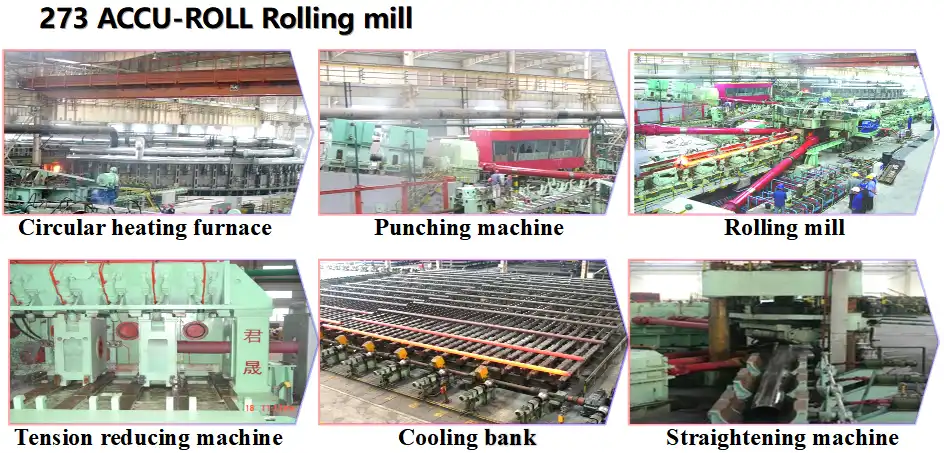
GNEE API Casing process line
GNEE API OCTG Casing Pipe test equipments

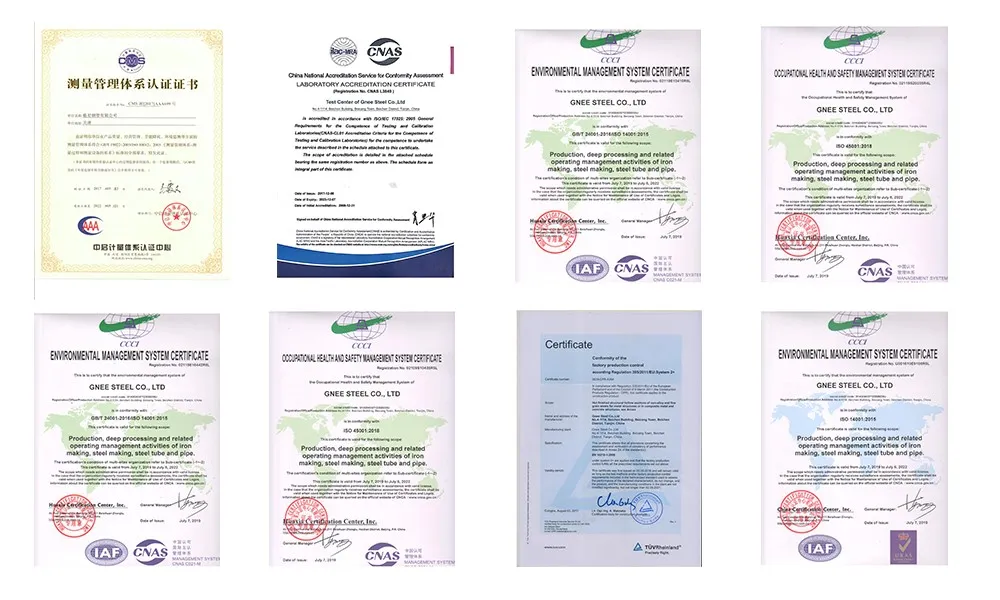
GNEE Oil Well OCTG Casing Certificate
FAQ
What grades of steel are used in API 5CT casing?
API 5CT steel grades are classified into four main groups:
General Purpose (J55, K55, N80): Most common and cost-effective for standard, shallow-to-medium wells.
Sour Service (L80, C90, T95, C110): Specifically designed for H2S (corrosive) environments; they have controlled hardness.
High Strength (P110): For deep and high-pressure wells; it has high load capacity but no H2S resistance.
Ultra-High Strength (Q125): For extreme depths and the most demanding well conditions.
What is OCTG casing and tubing?
OCTG stands for Oil Country Tubular Goods. It is the collective name for the specialized steel pipes used in the drilling, completion, and production of oil and gas wells.
The two primary types are:
Casing: The large-diameter pipe cemented into the borehole. It serves as the permanent structural lining to prevent the well from collapsing and to protect groundwater from contamination.
Tubing: The smaller-diameter pipe placed inside the casing. It acts as the conduit through which oil and gas flow from the underground reservoir to the surface.


