


L80 tubing is a high-strength specialty steel pipe used in oil and gas drilling engineering, manufactured to API 5CT standards, primarily for transporting hydrocarbons from the wellbore to the surface.
It belongs to the "tubing" component of the oil and casing system, installed inside the casing string and used with sucker rods for artificial lift operations. The L80 grade indicates a minimum yield strength of 552 MPa (80 ksi), offering excellent resistance to compression, torsion, and fatigue, making it suitable for medium-depth and complex well conditions.
From 2.875" to 5.5" OD, any wall thickness, shipped FOB Tianjin or CIF your port.
Common types of L80 tubing include:
L80-1: Standard low-alloy steel, suitable for general environments;
L80-13Cr: Martensitic stainless steel containing 12–14% chromium, providing superior resistance to carbon dioxide (CO₂) corrosion, widely used in high-CO₂ gas wells;
L80-9Cr: Contains 8–10% chromium, balancing corrosion resistance and strength, ideal for high-temperature and high-pressure environments.
Chemical Composition Requirements for L80 Tubing
| Element | L80-1 (Standard) | L80-13Cr (Corrosion-Resistant) | L80-9Cr (High-Temperature) |
|---|---|---|---|
| Carbon (C) | ≤0.43 | 0.15–0.25 | 0.25–0.35 |
| Manganese (Mn) | ≤1.90 | 0.25–1.00 | - |
| Sulfur (S) | <0.045% | ≤0.005% | ≤0.025% |
| Phosphorus (P) | <0.045% | ≤0.025% | ≤0.025% |
| Chromium (Cr) | - | 12.0–14.0% | 8.5–9.5% |
| Molybdenum (Mo) | - | 2.0–3.0% | - |
| Nickel (Ni) | - | 1.0–2.0% | - |
Mechanical Properties of L80 Tubing
| Property | L80-1 / L80-9Cr | L80-13Cr |
|---|---|---|
| Minimum Yield Strength (YS) | 552 MPa (80 ksi) | 552 MPa (80 ksi) |
| Maximum Yield Strength | 655 MPa | 655 MPa |
| Tensile Strength (TS) | ≥655 MPa | ≥655 MPa |
| Elongation (A) | ≥12% | ≥12% |
| Brinell Hardness (HB) | ≤241 HB | ≤241 HB |
| Impact Energy (Transverse, 0°C) | ≥68 J (PSL-2/3) | ≥68 J (PSL-2/3) |
Connections of API 5CT L80 Tubing
| Connection Type | English Name | Description | Application | Standard |
|---|---|---|---|---|
| EUE | External Upset End | Pipe end externally thickened with external threads, used with coupling having internal threads; enhances connection strength | Conventional oil wells, medium-depth wells | API 5CT / API 5B |
| NU | Non-Upset | No thickening on pipe body; threads cut directly on pipe end, lower cost but reduced strength | Shallow wells or low-stress conditions | API 5CT |
| BTC | Buttress Thread Coupling | Modified buttress thread, marked as BC, offers high tensile and compressive resistance | Commonly used when casing serves as tubing | API 5B |
| LC | Long Round Thread | Long round thread, 8 threads per inch (8 threads/in) | Oil wells with general sealing requirements | API 5B |
| SC | Short Round Thread | Short round thread, 10 threads per inch (10 threads/in) | Shallow or low-pressure wells | API 5B |
| Premium Connections | High-Performance Sealing Connections | e.g., Hydril (HYD), VAM, Fox; provide gas-tight seal, high torsional and fatigue resistance | Deep, high-pressure, or corrosive environments | Custom or project-specific specifications |
Applications of API 5CT L80 Tubing
| Application Type | Suitable L80 Subtype | Key Advantages |
|---|---|---|
| Conventional Oil & Gas Production | L80-1 | Moderate cost, reliable strength, meets general compression and torsion resistance requirements |
| High CO₂ Corrosion Environments | L80-13Cr | Contains 12–14% chromium, forms a dense oxide layer, excellent resistance to CO₂ corrosion |
| High-Pressure High-Temperature (HPHT) Wells | L80-9Cr | Chromium-molybdenum alloy enhances thermal stability, superior high-temperature performance |
| Sour Environments (H₂S-containing) | L80-13Cr (NACE certified) | Can meet NACE MR0175/ISO 15156 certification, ensuring safe operation in H₂S environments |
| Artificial Lift Systems | L80-1 / L80-13Cr | Good fatigue resistance, withstands long-term cyclic loading |
| Casing Used as Tubing | L80-1 (BTC connection) | Buttress thread (BTC) provides higher connection strength |
The tubing must undergo quenching and tempering heat treatment to ensure uniform mechanical properties, and strict chemical composition controls are applied (e.g., S and P content < 0.045%). Connection types are typically round threads or modified buttress threads (BTC/LTC/STC), with couplings.
In H₂S-containing sour environments, only NACE MR0175/ISO 15156-certified L80-13Cr tubing should be selected, accompanied by third-party inspection reports.
GNEE API 5CT L80 OCTG Pipe process line

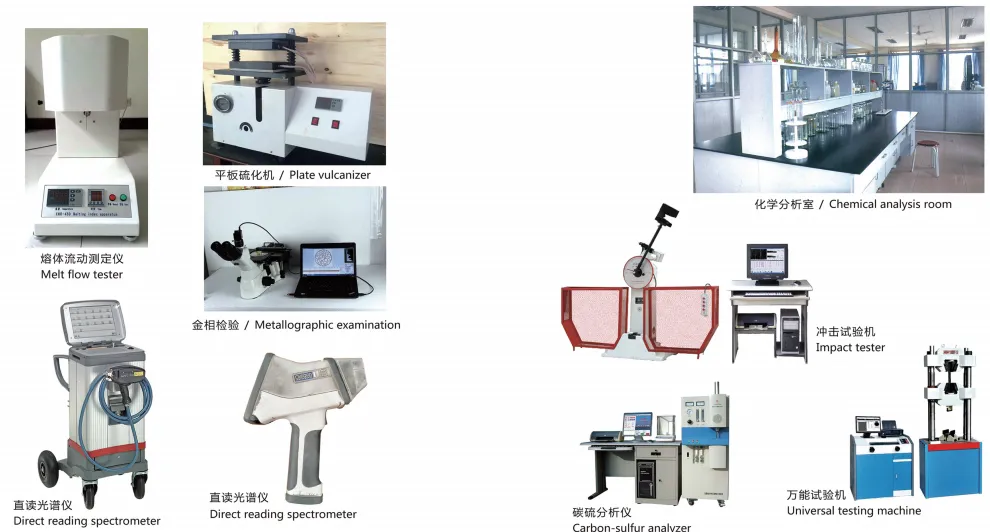
GNEE API 5CT L80 Casing and Tubing test equipments
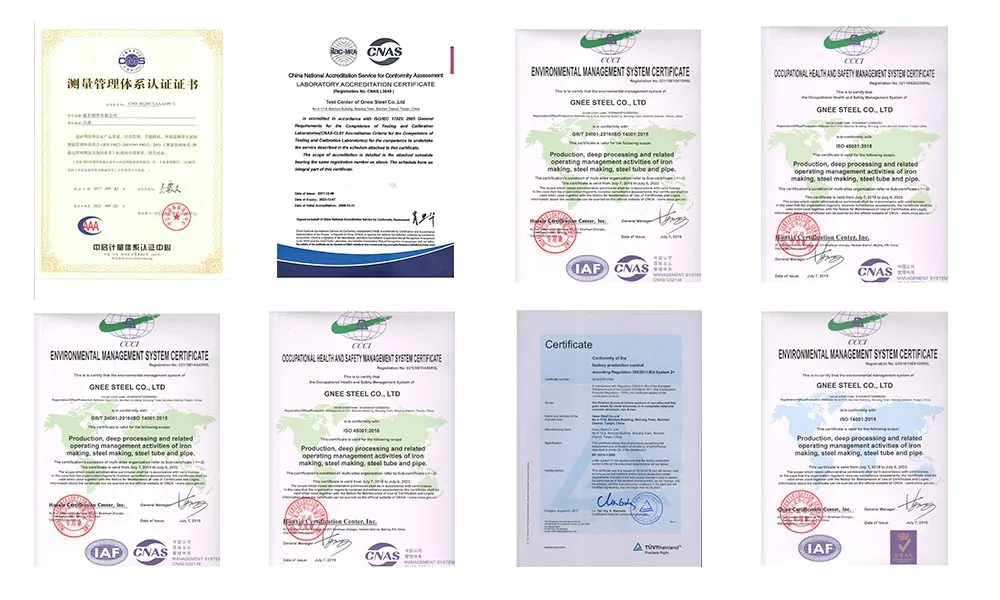
GNEE API 5CT L80 Oil well casing pipe certificate
FAQ
What is the difference between L80 and N80?
The main differences between L80 and N80 tubing lie in their strength range, heat treatment process, and corrosion resistance.
L80 tubing has a fixed yield strength of 552 MPa (80 ksi), undergoes quenching and tempering treatment, and has a homogeneous tempered sorbite microstructure, offering stable performance. It is specifically designed for medium-deep wells and high-pressure environments. It also has corrosion-resistant subtypes such as L80-13Cr, which can be certified by NACE MR0175 and are suitable for acidic wells containing H₂S and CO₂.
N80 tubing has a yield strength range of 552–758 MPa (80–110 ksi), commonly found in normalized or tempered states, with a ferrite + pearlite microstructure. Its strength depends on carbon content, and there are no officially certified corrosion-resistant variants. It is prone to pitting corrosion in H₂S/CO₂ environments, with corrosion rates reaching 1.27 mm/year. It is only suitable for shallow to medium-deep wells that are not acidic or have low corrosion, and is more cost-effective.
What is the difference between L80 and J55 tubing?
The yield strength of L80 tubing (552 MPa) is significantly higher than that of J55 (379 MPa), making it more suitable for medium-deep wells, high-pressure environments, and CO₂-containing environments; J55 is used for shallow wells, low-pressure, and non-corrosive conditions, and is less expensive. L80 is usually quenched and tempered, and has corrosion-resistant subtypes (such as L80-13Cr), while J55 has no NACE-certified variants and is not suitable for acidic wells.


