What Is Range 3 Casing? Reading the Length Letter
The question "what is range 3 casing" points to one field of an API 5CT order rather than to a type of steel. The standard divides both casing and tubing into three length bands, and the letter R3 is simply the top band for casing. Nothing about chemistry, strength or thread follows from it; those are decided in other clauses and other order lines.
Casing Range 1 2 3 at a Glance
| Band | Overall length, ft | Overall length, m | Where it normally appears |
|---|---|---|---|
| R1 | 16.0 - 25.0 | 4.88 - 7.62 | Used stock, short intervals, restricted haul roads |
| R2 | 25.0 - 34.0 | 7.62 - 10.36 | Default choice on many land rigs |
| R3 | 34.0 - 48.0 | 10.36 - 14.63 | Deep wells, offshore and export projects |
Bands apply to the assembled joint. Lengths outside a band can be supplied when buyer and manufacturer agree, so an exact cut length is a purchase-agreement term rather than a standard range.
R3 Casing Carries No Grade or Weight Meaning
A joint that measures 12 m is R3 casing whether it is J55 or P110, whether it is 40 lb/ft or 53.5 lb/ft, and whether it carries STC, BTC or a premium thread. Two suppliers quoting the same range and the same grade can still deliver different average lengths, because the standard fixes the boundaries and not a target inside them. That is why the average belongs on the purchase order.
API 5CT Casing Ranges and the Limits Inside a Band
API 5CT casing ranges are set out in the length clause of the standard, which also states that its figures apply unless the purchaser and the manufacturer agree otherwise. That opening condition is the lever a buyer uses: the band is a default, and anything more precise is written into the agreement.
API 5CT Range 3 and the Carload Variation
| Point | What the standard provides | What the buyer must decide |
|---|---|---|
| Band width | 34.0 - 48.0 ft (10.36 - 14.63 m) for R3 casing | Nothing, if the band alone is acceptable |
| Average inside the band | No minimum average is stated | An average length if joint count must be predictable |
| Variation in a shipment | A maximum permissible variation applies; a 95 percent rule is used for carload lots | Which lot basis the mill quotes on |
| Lengths outside the band | Allowed by agreement between the parties | The exact length and how it is identified |
| Short joints | Handled as a separate agreed percentage | Whether jointers are accepted at all |
Figure the exact variation and lot threshold from the edition of API 5CT named on the purchase order. The table records the principle, not a substitute for the current standard text.
The practical consequence is that an API 5CT range 3 order written with only the band is valid but loose. A mill may deliver all of its joints at the short end, all at the long end, or mixed, and still conform. If the string design assumed 12.2 m average joints and the delivery averages 10.5 m, the tally and the rig schedule both change.
Casing Length Ranges Are Not a Grade, Weight or Thread
Buyers new to OCTG sometimes read the range letter as a quality tier. It is not. Casing length ranges sit alongside the grade, weight and connection fields, and each of those is selected for a different reason: grade for strength and sour-service limits, weight and wall for collapse and burst, connection for sealing and axial load, range for handling and joint count.
Because the fields are independent, R3 appears across the whole product spectrum. J55 casing and K55 casing cover shallower surface and intermediate strings, N80 casing and L80 casing serve deeper or sour duties, and higher-strength grades are used where pressure and tension dominate. The length decision is made after those choices, not instead of them.
Range 3 Casing Pipe versus Tubing R3
Range 3 casing pipe and tubing R3 carry the same letter but not the same numbers. API 5CT keeps a separate row for tubing and for casing used as tubing, and the bands are narrower. Treating the two as equivalent is a reliable way to build a tally that will not reconcile when the pipe arrives.
| Product | R1 | R2 | R3 |
|---|---|---|---|
| Casing | 16 - 25 ft / 4.88 - 7.62 m | 25 - 34 ft / 7.62 - 10.36 m | 34 - 48 ft / 10.36 - 14.63 m |
| Tubing | 20 - 24 ft / 6.10 - 7.32 m | 28 - 32 ft / 8.53 - 9.75 m | 38 - 42 ft / 11.58 - 12.80 m |
| Integral-joint tubing upper limit | 26 ft / 7.92 m | 34 ft / 10.36 m | 45 ft / 13.72 m |
Tubing bands include their own permissible variation. Pup joints are ordered from the short-length table rather than assigned to R1, which is another reason to keep the two tallies separate.
Casing Joint Length and the String Tally
The main reason to specify casing joint length is that it drives the arithmetic of the whole string. The figures below take a 1,000 m interval and three assumed average joint lengths; they are planning arithmetic, not API values, and the coupling mass is not included.
| Assumed average joint | Joints per 1,000 m | Connections to make up |
|---|---|---|
| 9.14 m (30 ft), R2 | 110 | 109 |
| 12.19 m (40 ft), R3 | 83 | 82 |
| 14.63 m (48 ft), R3 | 69 | 68 |
Rounded up to whole joints. Substitute the agreed average length and the actual interval before using the figures for a rig schedule or a cost comparison.
Long Casing Joints Cut Make-ups and Leak Paths
Long casing joints remove about 27 make-ups per 1,000 m when a 40 ft R3 average replaces a 30 ft R2 average. Each make-up removed also removes a torque record, a thread compound application and a potential leak path, which is the usual argument for R3 on offshore and deepwater wells. The counterweight is single-joint weight: a heavy-wall 48 ft joint can exceed a metric ton before the coupling is added, and the catwalk, elevator and transport all have to suit it.
When Shorter Ranges Still Win
R3 is not automatically the right answer. A shorter range can be the better decision whenever the binding limit is access rather than connection count. A land rig with a compact pipe handling envelope, a storage yard with limited length, a haul route with tight turns, or a shallow interval where most of a 48 ft joint would be cut away are all cases for R2 or even R1.
There is no steel-quality penalty attached to the shorter bands. The grade, wall and connection are specified independently, so an R2 string of the same grade is the same material in shorter pieces. R1 is now most often seen in used or surplus inventory and in workover jobs where short lengths are convenient.
Range 3 Casing Length: Fixing the Average and the Maximum
If the tally matters, range 3 casing length needs two more figures besides the band: a minimum average and a maximum individual length. The average fixes how many joints the string will take; the maximum keeps the delivery inside the transport and rig envelope. Both are purchase-agreement terms, so they cost nothing to write at the enquiry stage and are expensive to correct after the pipe is cut.
| Field | Example wording | Reason |
|---|---|---|
| Band with limits | Range 3 (34.0 - 48.0 ft) | Removes any doubt that R2 was intended |
| Minimum average | 12.19 m (40 ft) | Standard sets no average; this fixes the joint count |
| Maximum length | Matched to booked transport | Prevents a compliant but unshippable joint |
| Jointer policy | Accepted or not accepted | Short joints are a separate agreed item |
| Cut lengths | Exact length and quantity | Handled by agreement, outside the band |
A pup joint is the usual answer when an exact short length is needed at the bottom of a string. Ordering it in the same grade and connection as the running string keeps the drift and the coupling envelope consistent, and avoids cutting a full R3 joint on site.
Range 3 Casing Dimensions, Marking and Certificates
Range 3 casing dimensions in the ordinary sense are still the same OD, wall, weight and drift that apply to any other range; what changes is only the assembled length and the handling envelope it creates. The dimensional checks at goods-in therefore stay the same, with one extra item: confirming that each measured length on the tally matches the joint that arrived.
| Record | What it should show | Why it matters |
|---|---|---|
| Per-joint tally | Joint number, measured length, weight, heat number | Reconcile the string on site |
| Length marking | Stenciled length, when agreed as an extra | Length is not in the default stencil sequence |
| Material certificate | EN 10204 3.1, or 3.2 when requested; API 5CT monogram | Traceability and standard conformity |
| Drift record | Full-length mandrel pass | Confirm bore clearance before running |
| Connection record | Thread type and make-up torque | Evidence at each leak path |
Requests for extra marking or documents belong on the purchase order. A standard delivery will not include them by default, and the mill cannot easily add them once the joints are shipped.
Casing Range Specification: the Buyer's Checklist
A workable casing range specification closes every field the standard leaves open. The list below is written for R3 but applies to any band: once the standard, grade, weight, connection and length basis agree across all quotes, the prices become comparable.
| Field | What to state |
|---|---|
| Standard | API 5CT / ISO 11960 with the edition named |
| Range | R3 band plus the agreed average and maximum |
| Grade | J55, K55, N80, L80, P110 and so on, independently of range |
| Weight and wall | Nominal lb/ft and wall; design against minimum wall |
| Size and connection | Outside diameter and STC / LTC / BTC or premium thread |
| Documents | Tally, EN 10204 3.1 certificate, drift and inspection scope |
The same fields should be repeated at receiving. Check the band and the measured lengths against the tally, confirm grade and heat against the certificate, verify the connection and drift, and isolate any joint that falls outside the agreed limits rather than mixing it into the string.
R3 Casing Pipe Packaging and Shipping
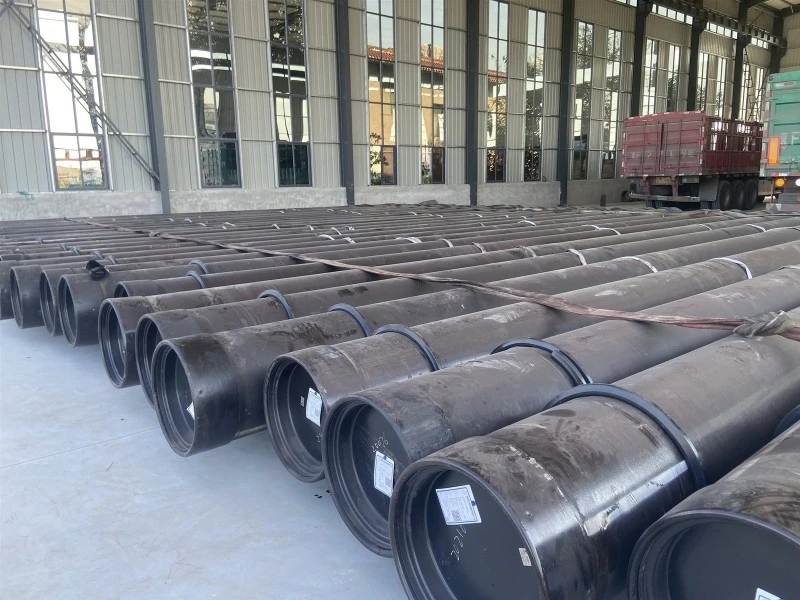
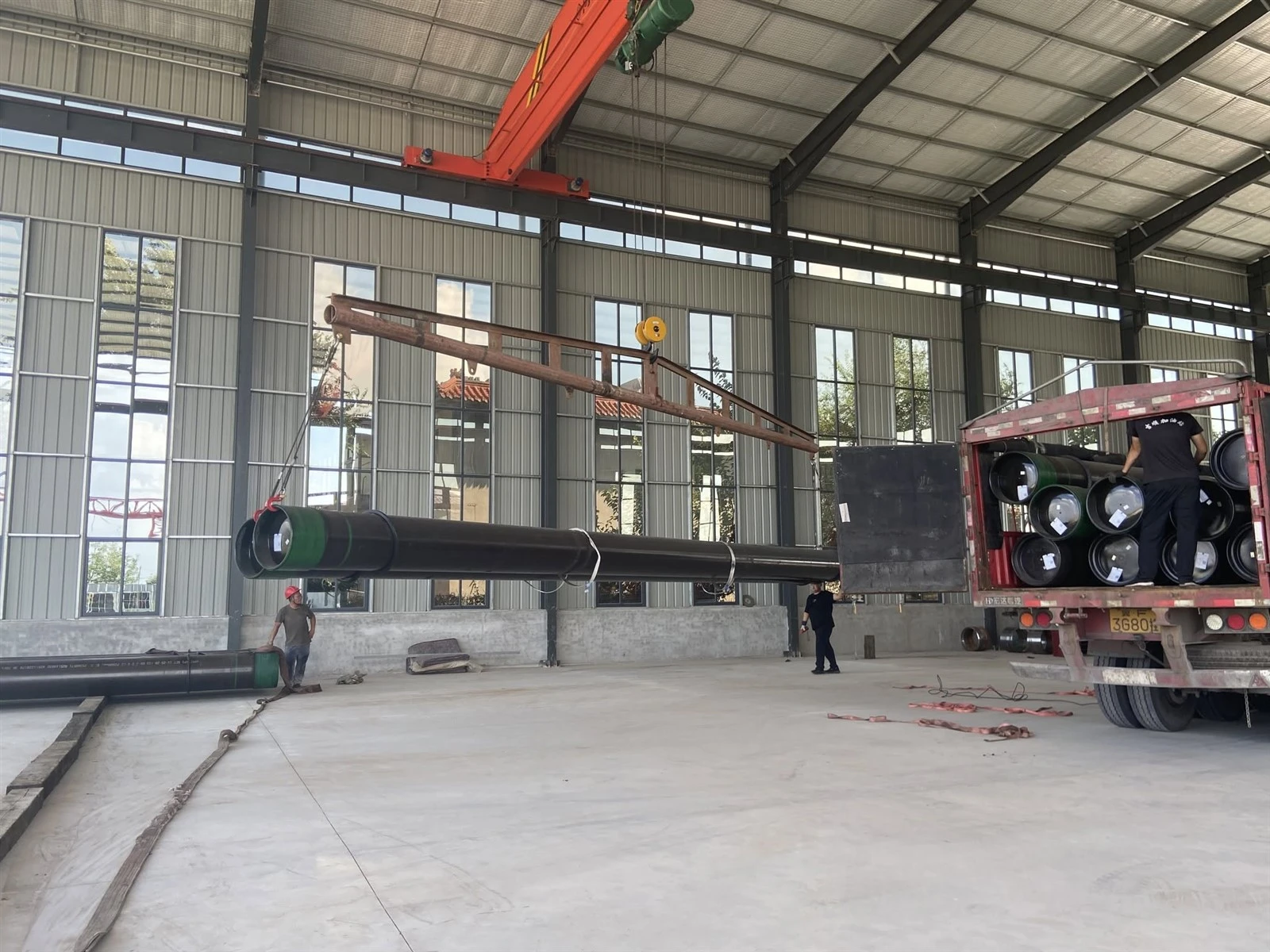
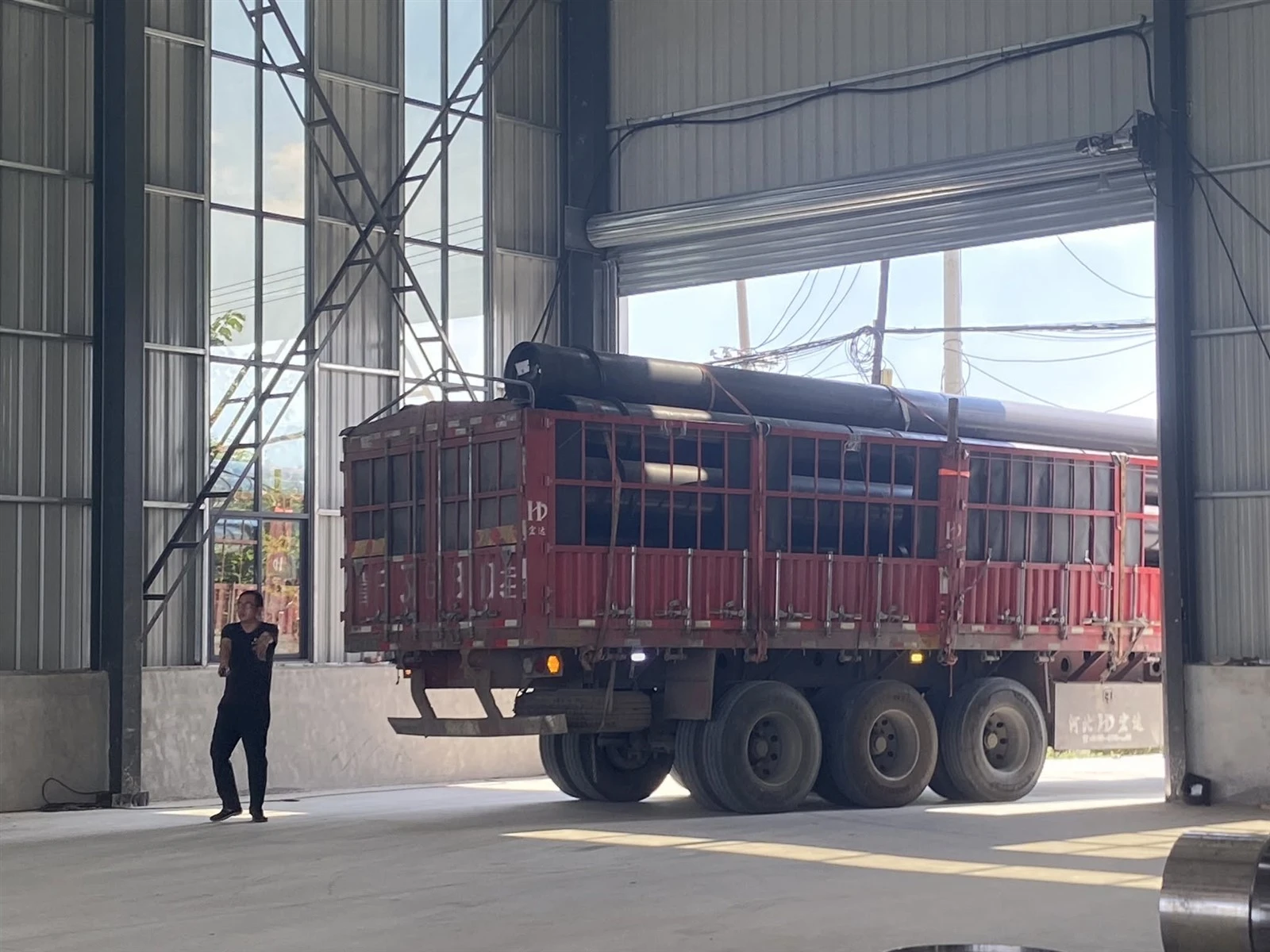
If the casing program fixes the interval, the grade and the connection, the remaining question is the length basis. Send the target depth, the range with any minimum average or maximum, the joint-count assumptions and the destination, and a quotation can be built against the same tally that will be used on site.
View casing products
API 5CT J55 Petroleum Casing Pipe
API 5CT T95 Oilfield Casing Pipes
FAQ
Why would a buyer choose Range 3 over Range 2 for a casing string?
The commercial case is the connection count. For the same interval, a longer average joint means fewer joints to make up, fewer torque records to keep, fewer thread-compound applications and fewer places that can leak. Offshore and deepwater programs favor it for that reason, and many export orders specify it as the default. The trade-off is handling: a long, heavy joint needs a longer flatbed, more yard space and a rig floor set up for that length.
Does a Range 3 joint carry a different grade or wall thickness?
No. Range is independent of grade, weight and connection. J55, K55, N80, L80 and P110 casing are all available in R3, in the same weights and with STC, LTC, BTC or premium threads. A purchase line that says only R3 leaves steel and pressure rating entirely undefined; the grade, nominal weight, wall and connection have to be written as separate fields.
Are casing and tubing Range 3 the same length band?
No, and the two tallies are not interchangeable. API 5CT puts casing R3 at 34.0 to 48.0 ft (10.36 to 14.63 m), while tubing R3 is a narrower 38.0 to 42.0 ft (11.58 to 12.80 m), with a longer upper limit for integral-joint tubing. A string planned on one range has to be recounted before it is ordered on the other, even when the nominal diameter looks similar.
What is a jointer and how many are allowed in an API 5CT order?
A jointer is a joint shorter than the minimum of the stated range, used to land a string on an exact depth without cutting a full-length joint. API 5CT treats jointers as a percentage of the total footage, commonly capped at about five percent, and they are agreed between buyer and manufacturer rather than assumed. List them as a separate line on the tally with their measured lengths.
Does the coupling count toward the stated joint length?
For threaded-and-coupled casing the specified length is the assembled length, measured with the coupling installed, from the pin end to the outer face of the coupling. Recording practice is to the nearest hundredth of a metre or tenth of a foot. The face-to-face length of the pipe body is therefore slightly shorter than the figure on the tally, which matters when several joints are made up into a close-tolerance interval.
Is the measured joint length stenciled on every casing joint?
Not by default. The standard marking sequence identifies grade, size, weight, thread and heat, but length is not a mandatory stencil item. If the crew needs the length painted on each joint, or needs a per-joint document, request it as an additional marking and as a required delivery document when the order is placed; it is not something a mill will add retrospectively.
When is Range 1 or Range 2 casing the better choice?
Shorter ranges still win where the constraint is access rather than connection count: a rig with a short pipe-handling envelope, a yard or haul road that cannot take a 48 ft joint, a shallow interval where a single long joint would be mostly cut away, or surplus stock that happens to be R1. None of these is a downgrade in steel quality; they are length decisions made against the handling plan.
What should a per-joint casing tally include?
At minimum, each joint number, its measured assembled length, the nominal weight and the heat number, so the delivered string can be reconciled against the mill certificate and the run sheet. For an R3 order add the connection type and, where agreed, the drift result and the make-up torque record. A tally that only gives total footage cannot show which joint is short or which heat went where.