





Oil Well Casing
Oil Well Casing: Complete Technical Guide Based on the Latest API Spec 5CT 10th Edition (2025)
1. Basic Definition & Core Functions of Oil Well Casing
1.1 What Is Oil Well Casing?
Oil well casing is one of the primary products within the Oil Country Tubular Goods (OCTG) category. It is a one-time consumable material, installed in successive casing strings with decreasing outer diameters, then permanently cemented in place by pumping cement slurry into the annulus between the casing and the borehole wall.
Casing differs fundamentally from production tubing and drill pipe: casing cannot be pulled out and reused after cementing, while tubing and drill string are reusable downhole tools.
1.2 Four Core Working Functions of Oil Well Casing
- 1. Maintain borehole structural integrity, prevent loose underground formations from collapsing and sticking drill string;
- 2. Complete zonal isolation: separate formations with different pressure, oil, gas and water layers to avoid cross-flow of underground fluids;
- 3. Environmental protection: isolate shallow freshwater aquifers from drilling fluid, crude oil and natural gas to prevent groundwater contamination;
- 4. Pressure containment: withstand high hydrostatic pressure, hydraulic fracturing pressure and long-term production pressure to eliminate blowout risks.
2. Five Standard Types of Casing Strings (Wellbore Layer Sequence)
Every oil or gas well adopts multi-layer casing strings according to well depth and geological complexity. The five standardized casing types are listed from shallow surface to deep reservoir:
| Casing Type | Typical OD Size | Core Application & Function |
|---|---|---|
| Conductor Casing | 18" ~ 36" | The first casing string; stabilize unconsolidated near-surface formations, block shallow gas leakage, provide foundation for wellhead equipment installation. |
| Surface Casing | 13-3/8" (most common) | Protect freshwater aquifers, prevent shallow well blowouts, support the weight of all lower casing strings. |
| Intermediate Casing (Optional) | 13-3/8" ~ 16" | Isolate unstable collapse zones, lost circulation layers and abnormal high-pressure formations; typically used in deep or geologically complex wells. |
| Production Casing | 4-1/2" ~ 7" | Extend to total well depth; permanently seal hydrocarbon reservoirs, resist long-term formation pressure and corrosive fluids. |
| Liner String | Matched with upper casing ID | Hanged from inner wall of upper casing without extending to wellhead; reduce casing costs and overall well construction costs for deep wells. |
3. API 5CT 10th Edition Standard Specifications for Oil Well Casing
3.1 Standard Outer Diameter & Weight Range
Standard casing outer diameters range from 4-1/2 inches to 20 inches. Nominal weight (PPF, pounds per foot) covers 9.5 PPF up to 133 PPF for different wall thickness grades.
3.2 Full List of API Standard Steel Grades
- Low-strength shallow well grade: H40, J55, K55, M65
- Medium-strength grade: N80, N80Q
- Corrosion-resistant chromium alloy grades: L80, L80-9Cr, L80-13Cr (for CO₂ corrosion reservoirs)
- Sour service anti-H₂S grades: C90, C95, T95
- Deep & ultra-deep high-strength grade: P110, Q125
- Common proprietary ultra-high-strength grades (such as V150)
Chemical Composition (%) of API 5CT Casing
| Chemical Composition of API 5CT,Mass Fraction(%) | |||||||||||||||
|---|---|---|---|---|---|---|---|---|---|---|---|---|---|---|---|
| Group | Grade | Type | C | Mn | Mo | Cr | Ni | Cu | P | S | Si | ||||
| min. | max. | min. | max. | min. | max. | min. | max. | max. | max. | max. | max. | max. | |||
| 1 | H40 | - | - | - | - | - | - | - | - | - | - | - | 0.03 | 0.03 | - |
| J55 | - | - | - | - | - | - | - | - | - | - | - | 0.03 | 0.03 | - | |
| K55 | - | - | - | - | - | - | - | - | - | - | - | 0.03 | 0.03 | - | |
| N80 | 1 | - | - | - | - | - | - | - | - | - | - | 0.03 | 0.03 | - | |
| N80 | Q | - | - | - | - | - | - | - | - | - | - | 0.03 | 0.03 | - | |
| R95 | - | - | 0.45 | - | 1.9 | - | - | - | - | - | - | 0.03 | 0.03 | 0.45 | |
| 2 | M65 | - | - | - | - | - | - | - | - | - | - | - | 0.03 | 0.03 | - |
| L80 | 1 | - | 0.43 | - | 1.9 | - | - | - | - | 0.25 | 0.35 | 0.03 | 0.03 | 0.45 | |
| L80 | 9Cr | - | 0.15 | 0.3 | 0.6 | 0.9 | 1.1 | 8 | 10 | 0.5 | 0.25 | 0.02 | 0.01 | 1 | |
| L81 | 13Cr | 0.15 | 0.22 | 0.25 | 1 | - | - | 12 | 14 | 0.5 | 0.25 | 0.02 | 0.01 | 1 | |
| C90 | 1 | - | 0.35 | - | 1.2 | 0.25 | 0.85 | - | 1.5 | 0.99 | - | 0.02 | 0.01 | - | |
| T95 | 1 | - | 0.35 | - | 1.2 | 0.25 | 0.85 | 0.4 | 1.5 | 0.99 | - | 0.02 | 0.01 | - | |
| C110 | - | - | 0.35 | - | 1.2 | 0.25 | 1 | 0.4 | 1.5 | 0.99 | - | 0.02 | 0.005 | - | |
| 3 | P110 | - | - | - | - | - | - | - | - | - | - | - | 0.03 | 0.03 | - |
| 4 | Q125 | 1 | - | 0.35 | - | 1.35 | - | 0.85 | - | 1.5 | 0.99 | - | 0.02 | 0.01 | - |
| a. The carbon content for L80 may be increased up to 0, 50 % maximum if the product is oil-quenched. | |||||||||||||||
| b. The molybdenum content for Grade C90 Type 1 has no minimum tolerance if the WT is less than 17, 78 mm. | |||||||||||||||
| c. The carbon content for R95 may be increased up to 0, 55 % maximum if the product is oil-quenched. | |||||||||||||||
| d. The molybdenum content for T95 Type 1 may be decreased to 0, 15 % minimum if the WT is less than 17, 78 mm. | |||||||||||||||
| e. For EW Grade P110, the phosphorus content shall be 0,020 % maximum and the sulfur content 0,010 % maximum | |||||||||||||||
| NL = no limit. Elements shown shall be reported in product analysis. | |||||||||||||||
Mechanical Properties of Oil casing pipe:
| Steel grade | Type | Yield Strength Mpa | Tensile Strength (min) Mpa | Hardness | ||
|---|---|---|---|---|---|---|
| min | max | HRC | HBW | |||
| J55 | - | 379 | 552 | 517 | - | - |
| K55 | - | 379 | 552 | 655 | - | - |
| N80 | 1 | 552 | 758 | 689 | - | - |
| Q | 552 | 758 | 689 | - | - | |
| L80 | 1 | 552 | 655 | 655 | 23 | 241 |
| 9Cr | 552 | 655 | 655 | 23 | 241 | |
| 13Cr | 552 | 655 | 655 | 23 | 241 | |
| C90 | 621 | 724 | 689 | 25.4 | 255 | |
| C95 | - | 655 | 758 | 724 | - | - |
| T95 | 655 | 758 | 724 | 25.4 | 255 | |
| P110 | - | 758 | 965 | 862 | - | - |
| Q125 | All | 862 | 1034 | 931 | - | - |
3.3 API Standard Thread Connections & Premium Special Connections
3.3.1 Common API Casing Thread Connections
- STC: Short Round Thread Casing, commonly used in low-pressure and shallow well applications
- LC: Long Round Thread Casing, provides higher tensile capacity than STC
- BC: Buttress Thread Casing, offers higher joint strength and is widely used in medium- and deep-well applications
- XC: Extreme-Line Casing, integral joint connection without a separate coupling
3.3.2 Premium & Semi-Premium Special Connections
For harsh working conditions including high pressure, high temperature, sour H₂S/CO₂ corrosive wells, premium metal-to-metal sealed premium connections are adopted, which provide 100% joint efficiency and reliable gas-tight sealing that standard API threads cannot achieve.
3.4 Standard Length & Product Specification Level
- Standard manufacturing length: Range 1, Range 2, Range 3
- Product Specification Level: PSL-1, PSL-2, PSL-3 (higher PSL represents stricter factory inspection standards)
3.5 Colour Code of Casing and Tubing
| Grade | Colour Code Pipe | Heat Treatment |
Characteristics and |
|
J55 |
 |
Normalized, Normalized and Tempered or quenched and Tempered | Tubing & Casing for general service |
|
K55 |
 |
Normalized, Normalized and Tempered or quenched and Tempered | Casing for general service |
|
N80 Type 1 |
 |
Normalized or Normalized and Tempered | Tubing & Casing for general service |
|
N80 Type Q |
 |
Quenched and Tempered | Tubing & Casing for general service |
|
L80 Type 1 |
 |
Quenched and Tempered | Tubing & Casing with controlled yield range for sour well service |
|
L80 9 Cr |
 |
Quenched and Tempered | Tubing & Casing for oil & gas wells affected by CO2 corrosion |
|
L80 13 Cr |
 |
Quenched and Tempered | Tubing & Casing for oil & gas wells affected by CO2 corrosion |
|
C90 Type 1 |
 |
Quenched and Tempered | Hight strength Tubing & Casing with controlled yield range for service in hydrogen sulphide environments |
|
R95 |
 |
Quenched and Tempered | High strength Tubing & Casing with conntrolled yield range |
|
T95 Type 1 |
 |
Quenched and Tempered | High strength Tubing & Casing with controlled yield range for service in hydrogen sulphide environments |
|
C110 |
 |
Quenched and Tempered | High strength Casing with controlled yield range for service in hydrogen sulphide environments |
| P110 |  |
Quenched and Tempered | High strength Tubing & Casing for high pressure service |
| Q125 Type 1 |  |
Quenched and Tempered | Casing for deep well service |
Not sure whether J55, N80, L80, P110, or Q125 is suitable for your project? Our technical team can recommend the most cost-effective solution based on your well conditions.
4. Three Mandatory Mechanical Performance Indicators for Casing Design
During drilling, fracturing and oil production, oil well casing bears combined axial tension, compression, bending and torsional loads. All casing must pass three core performance tests to meet API 5CT requirements:
- Collapse Resistance: Ability to resist external extrusion force from surrounding rock formations;
- Burst Resistance: Ability to resist internal high pressure from reservoir fluids and injection media;
- Tensile Strength: Ability to bear the self-weight of casing string and axial pulling load during running operations.
5. Manufacturing Technology & Factory Protection Standards
5.1 Two Main Production Processes
- Seamless Casing: Manufactured from hot-worked seamless steel tubes without welding seam, widely used for small and medium diameter high-pressure deep well casing;
- ERW Electric-Resistance Welded Casing: Medium-diameter casing with longitudinal weld seam; weld seam must be post-heat treated to eliminate untempered martensite in the weld zone and avoid brittle cracking.
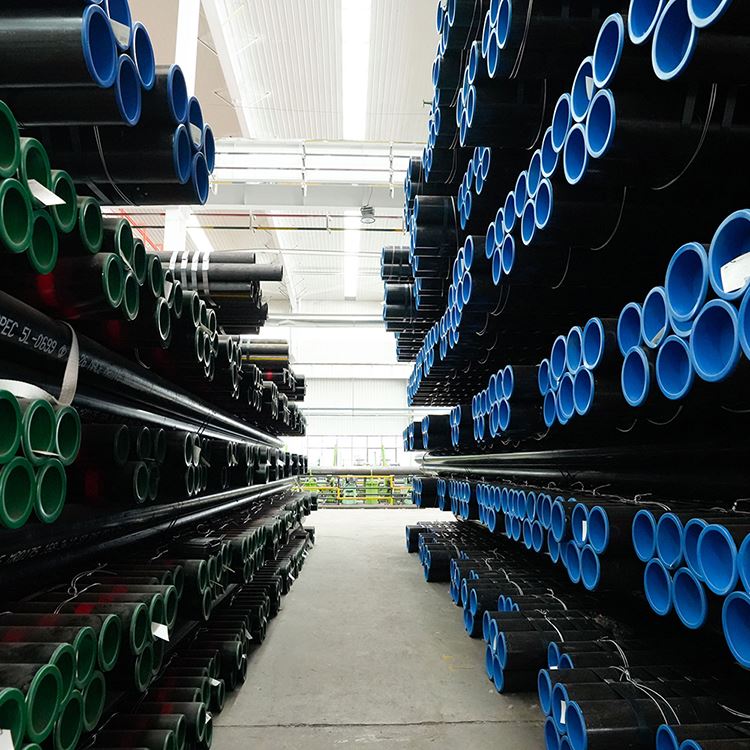
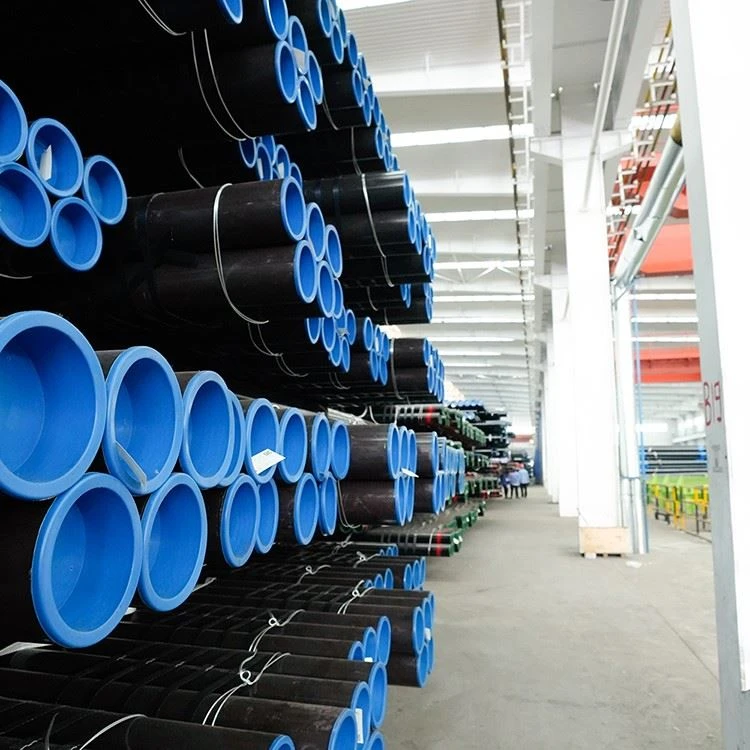
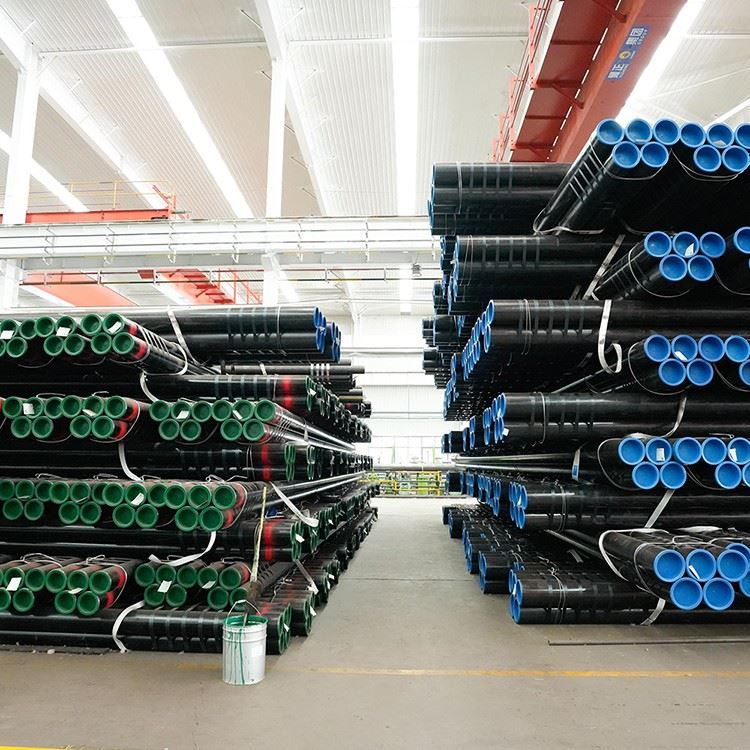
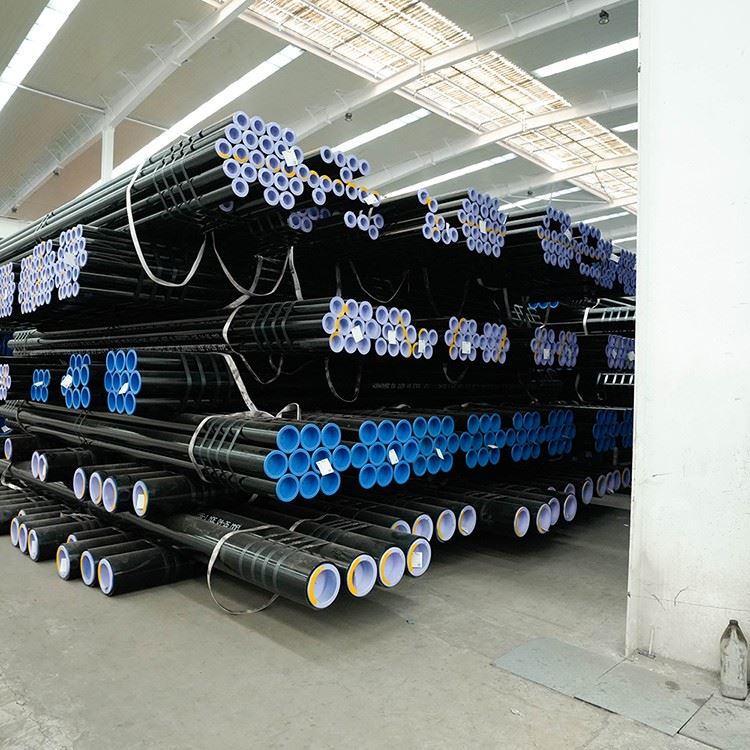
5.2 Standard Factory Anti-Corrosion & Thread Protection
- Outer surface coating: Anti-rust mill varnish;
- Thread protection: Plastic, metal or composite pin & box protectors for both ends;
- Inner bore: Bare steel without internal coating by default.
5.3 Quality Certification & Inspection Rules
Each batch of casing is delivered with an official Mill Test Certificate (MTC), fully compliant with the latest API 5CT 10th Edition standards. Third-party inspection by organizations such as SGS or BV can be arranged upon request at the buyer's expense.
6. Key Factors in Selecting Oil Well Casing
Engineers and procurement specialists evaluate the following six core factors to match casing specifications for individual drilling projects:
- Subsurface geological conditions (formation stability, fault distribution, lost circulation layers);
- Total well depth and maximum downhole pressure & temperature;
- Composition of produced formation fluids (CO₂, H₂S, chloride ion corrosive medium);
- Global industry regulatory and API standard compliance requirements;
- Required mechanical performance grade (anti-collapse, burst, tensile);
- Overall project budget and life-cycle cost considerations
Oil Well Casing test and inspection


Need API 5CT certificates, Mill Test Certificates (MTC), or third-party inspection reports? We can provide complete quality documentation before shipment.
OCTG Casing Pipe packaging and shipping

Oil and Gas Casing Pipe Certificate

7. FAQ
FAQ 1: What is the main difference between oil well casing and production tubing?
Casing is large-diameter, one-time cemented steel pipe to support the entire borehole wall. Tubing is small-diameter reusable pipe installed inside casing, solely used to transport crude oil and natural gas from underground reservoirs to ground processing facilities.
FAQ 2: What is the latest official global standard for oil well casing?
The unified worldwide standard is API SPEC 5CT 10th Edition, published in 2025, which covers casing & tubing design, manufacturing, mechanical testing, marking, packaging and transportation specifications.
FAQ 3: Can used or reconditioned oil well casing meet API standards?
According to API 5CT rules, reconditioned casing must pass all identical mechanical and corrosion performance tests as brand-new casing; reconditioned casing that fails to meet API requirements is prohibited for oil & gas well construction.
FAQ 4: When is liner string used instead of full-length production casing?
Liner string is widely applied in deep and ultra-deep wells. Since liners only hang from upper casing without extending all the way to the wellhead, it can greatly reduce steel consumption and overall OCTG procurement costs while meeting all downhole pressure and mechanical requirements.
FAQ 5: Why do some oil wells need anti-sulfur and anti-corrosion casing grades like L80-13Cr and T95?
If underground reservoirs contain high concentrations of hydrogen sulfide (H₂S), carbon dioxide (CO₂) or chloride ions, ordinary carbon steel casing will suffer sulfide stress cracking (SSC), CO₂ corrosion and pitting corrosion, leading to casing deformation or rupture. Special alloy steel grades are designed to resist such corrosive downhole environments.
FAQ 6: What are PSL-1, PSL-2, PSL-3 in API 5CT casing specifications?
PSL stands for Product Specification Level, representing different factory inspection strictness levels. PSL-3 requires the most comprehensive mechanical, dimensional and chemical composition sampling tests, commonly used for high-risk deep sour gas wells; PSL-1 is the basic standard for shallow low-risk wells.
8. Conclusion
Oil well casing is the irreplaceable core structural component of all oil and gas drilling and completion operations. Selecting the appropriate casing type, steel grade, thread connection and wall thickness according to geological conditions and well design requirements is essential for safe drilling, long-term well integrity, and compliance with international standards.
Hot Tags: oil well casing, China oil well casing manufacturers, suppliers, factory
Previous
BTC Casing PipeYou Might Also Like


Send Inquiry