





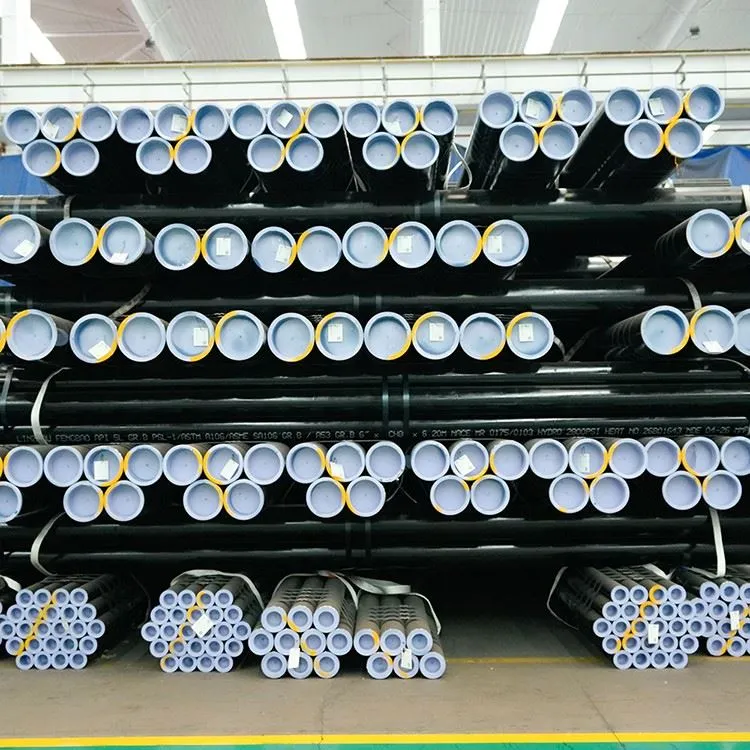
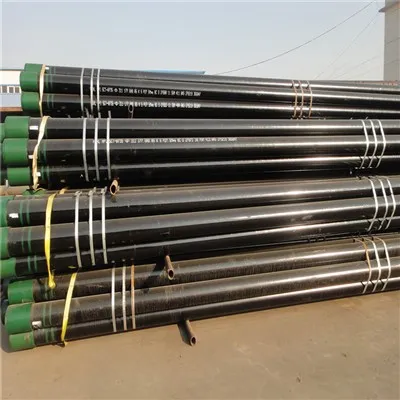
L80-9Cr Oil Casing
What is API 5CT L80-9Cr Oil Casing?
API 5CT L80-9Cr is a specialized corrosion-resistant alloy (CRA) casing pipe designed for wells with moderate Carbon Dioxide ( CO2 ) levels and high temperatures. It is an alloy steel containing 9% Chromium and 1% Molybdenum.
Technically, L80-9Cr bridges the gap between standard L80-1 (carbon steel) and L80-13Cr (stainless steel). The 9% Chromium content provides a protective layer against weight-loss corrosion, while the Molybdenum improves resistance to pitting and maintains strength at higher temperatures. It is a "controlled hardness" grade (max 23 HRC), making it suitable for environments where small amounts of H2S might be present alongside
CO2 .
Identification of Color Band for L80-9Cr
In accordance with API 5CT, color bands are painted on the pipe body and couplings for quick field identification.
| Grade/Type | Band 1 | Band 2 | Band 3 | Band 4 |
| L80-9Cr | Red | Brown | Orange | Orange |
Heat Treatment Methods for L80-9Cr Pipes
Heat treatment is critical to ensuring the martensitic structure and the 23 HRC hardness limit.
| Process | Method | Description |
| Austenitizing | Heating | Pipe is heated to 900°C–950°C to form a complete austenite structure. |
| Quenching | Rapid Cooling | Accelerated cooling (usually oil or water) to transform austenite into martensite. |
| Tempering | Reheating | Reheated to 650°C–750°C to achieve the target 80,000 psi yield strength and ensure high toughness. |
Chemical Composition and Mechanical Properties
Chemical Composition (Mass Fraction, %)
| Element | Symbol | L80-9Cr Requirement |
| Carbon | C | ≤ 0.15% |
| Chromium | Cr | 8.00% – 10.00% |
| Molybdenum | Mo | 0.90% – 1.10% |
| Manganese | Mn | 0.30% – 0.60% |
| Silicon | Si | ≤ 0.50% |
| Phosphorus | P | ≤ 0.020% |
| Sulfur | S | ≤ 0.010% |
Mechanical Properties
| Property | Value (Imperial) | Value (Metric) |
| Yield Strength | 80,000 – 95,000 psi | 552 – 655 MPa |
| Tensile Strength (Min) | 95,000 psi | 655 MPa |
| Hardness (Max) | 23 HRC | 241 HBW |
| Elongation | Formula based | ~15% minimum |
API 5CT L80-9Cr Casing Pipe Dimensions and Tolerances
Common Dimensions
| OD (Inch) | Weight (lb/ft) | Wall Thickness (mm) | Drift Diameter (mm) |
| 5-1/2" | 17.00 | 7.72 | 121.08 |
| 7" | 29.00 | 10.59 | 155.45 |
| 9-5/8" | 47.00 | 11.99 | 216.53 |
Tolerances
| Parameter | Tolerance |
| Outside Diameter (OD) | -0.75% to +1.00% |
| Wall Thickness | -12.5% (No positive limit, restricted by weight) |
| Weight | -3.5% to +6.5% (Single length) |
| Straightness | < 0.2% of total length |
Connection Types, Ends, and Couplings
Ends: Typically Threaded and Coupled (T&C).
API Connections:
STC (Short Round Thread): Standard applications.
LTC (Long Round Thread): Better tension and seal.
BTC (Buttress Thread): Preferred for 9Cr due to better torque and load resistance.
Premium Connections: Frequently used with 9Cr for Gas-Tight sealing in high-pressure gas wells.
Couplings: Must be made of L80-9Cr material and subjected to the same Q&T heat treatment as the pipe.
Key Features
Intermediate Corrosion Resistance: Superior to carbon steel in CO2 environments, though less resistant than 13Cr.
Molybdenum Advantage: The 1% Mo addition provides significantly better resistance to pitting corrosion in chloride-containing waters.
High-Temperature Stability: Maintains mechanical integrity at higher temperatures than standard carbon grades.
Cost-Effective: Offers a "middle-ground" price point for wells that require more than L80-1 but don't strictly require the expensive 13Cr stainless steel.
Reference Inspection of L80-9Cr Casing Pipe
To guarantee performance in corrosive environments, the following inspections are mandatory:
Hardness Testing: 100% of joints are tested to ensure they do not exceed 23 HRC (preventing SSC).
Hydrostatic Test: Every pipe is tested to pressures based on 80% of yield strength (often > 8,000 psi).
Non-Destructive Examination (NDE):
Ultrasonic (UT): Checks for wall thickness and internal defects.
Magnetic Particle (MPI): Detects surface cracks, especially around the threads.
Drift Test: A standard mandrel is passed through the pipe to ensure tool clearance.
Visual Inspection: Strict checking for surface pitting or scratches which could initiate corrosion.
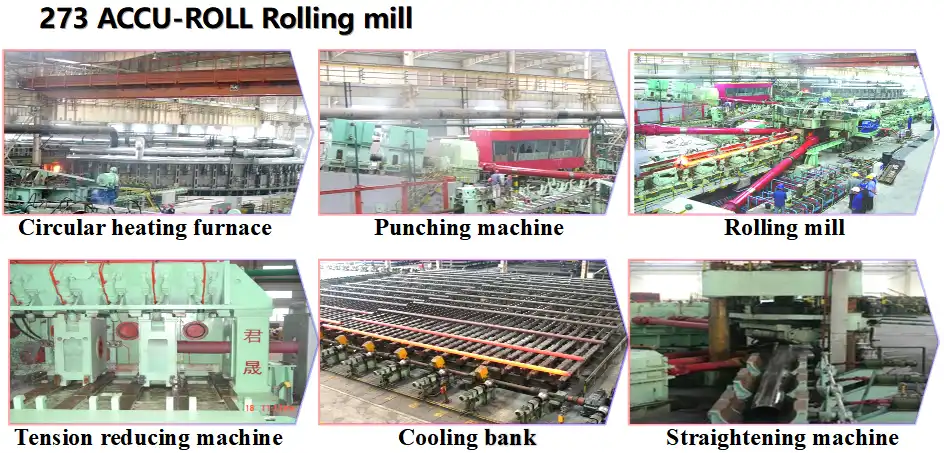
GNEE API 5CT L80-9CR Casing Pipe Process Line
GNEE API 5CT L80-9CR OCTG Pipe test equipments
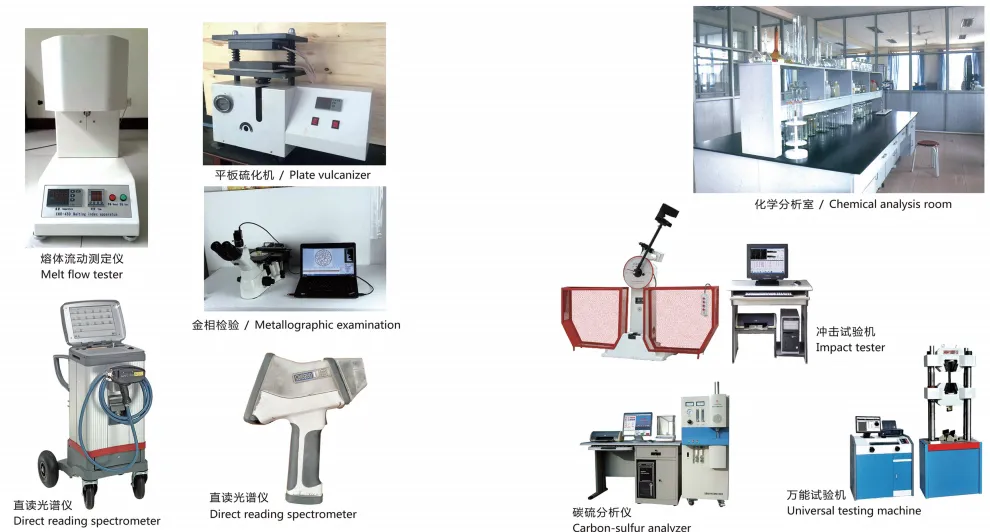
100% UT Inspected & Hydro-tested to Ensure Zero Defects. Click to Consult Our Quality Control Standards for 9Cr Alloys.
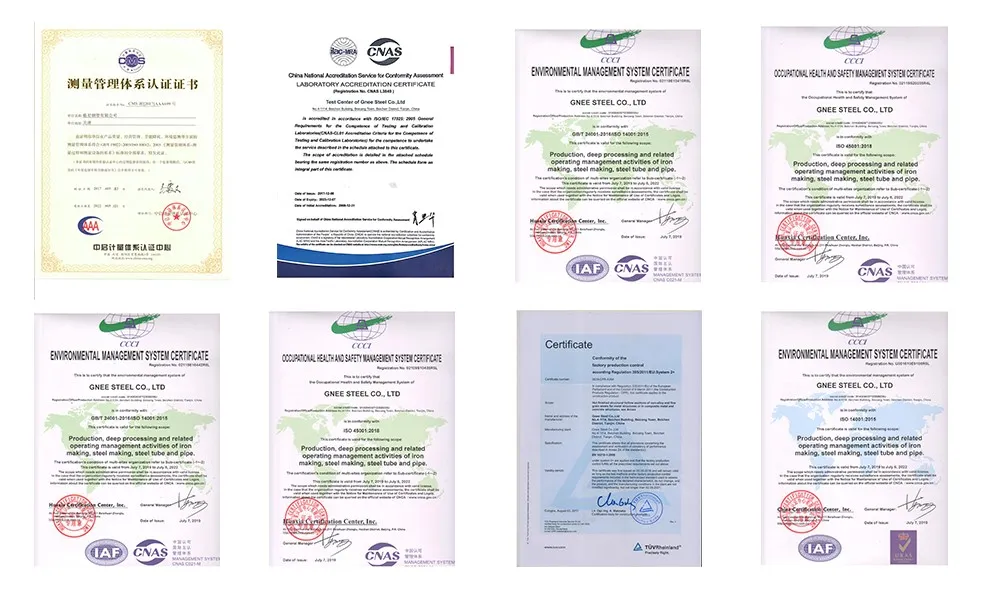
GNEE API 5CT L80-9CR Oil well casing pipe certificate
FAQ
What's the difference between API 5CT L80-1, L80-9Cr and L80-13Cr?
The primary difference between these three grades is their Chromium (Cr) content, which determines their level of corrosion resistance. While they all share the same yield strength (80,000 psi), they are used in very different environments:
| Feature | L80-1 | L80-9Cr | L80-13Cr |
| Material | Low-Alloy Carbon Steel | 9% Cr + 1% Mo Alloy | 13% Cr Stainless Steel |
| Target Corrosive | Sour Service (H2S) | Moderate CO2 | High CO2 (Sweet Gas) |
| Corrosion Resistance | Basic / Low | Moderate (Good pitting resistance) | Excellent (Best for CO2 ) |
| Max Hardness | 23 HRC | 23 HRC | 23 HRC |
| Relative Cost | $ (Economical) | (Intermediate) | $ (Expensive) |
Are L80 9Cr available as welded pipe?
No.
According to the API 5CT specification, L80-9Cr (and L80-13Cr) must be manufactured as Seamless (SML) pipe only.
Welding is not permitted for these high-chromium grades because it is difficult to maintain uniform corrosion resistance and the required metallurgical properties (specifically the 23 HRC hardness limit) in the weld zone and heat-affected zone (HAZ).
What are the grades of casing pipes?
API 5CT casing grades are categorized into four groups: Group 1 (J55/K55/N80) for general shallow wells, Group 2 (L80/C90/T95) for corrosive and sour (H2S) service, and Groups 3 and 4 (P110/Q125) for high-pressure, ultra-deep applications, ensuring optimized strength and corrosion resistance across all drilling environments.
Hot Tags: l80-9cr oil casing, China l80-9cr oil casing manufacturers, suppliers, factory
You Might Also Like



Send Inquiry