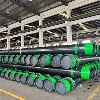
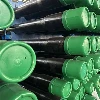
What Is 2-7/8 In. Oilfield Pipe?
The 2-7/8 figure is a nominal outside diameter, not a bore and not a thread. Seven eighths of an inch is 0.875 in., so 2-7/8 in. is 2.875 in., and that converts to 73.02 mm, which is the number that appears on a certificate of inspection, a mill stencil and a customs declaration. Everything inside that 73.02 mm is decided by the weight designation printed after it: a 6.40 lb/ft joint has a 5.51 mm wall and a 62.00 mm bore, and a 9.35 lb/ft joint of the same outside diameter has an 8.64 mm wall and a 55.74 mm bore. Same pipe on the outside, a different pipe everywhere else.
"Oilfield pipe" is a trade term rather than a specification. It covers tubing, casing, drill pipe and line pipe, and at this diameter it almost always means tubing, because 2-7/8 falls inside the tubing size range and below the casing size range. A 2-7/8 joint is threaded at both ends, shipped with a coupling on one end and a thread protector on the other, and is made to be pulled and re-run rather than cemented in place. That single fact drives the whole buying decision: connection sealing and make-up integrity matter more here than they do on a string that is set once and forgotten, and the price is read against a grade and an end finish, not against a steel tonnage alone.
Supply is seamless in the main, with electric-welded tube offered in the lighter walls and in the grades that permit welding. The standard is API 5CT / ISO 11960 for the product and API 5B for the threads and the gauges, and the drift, hydrostatic and non-destructive tests are the same ones that apply to any OCTG string: they are the reason a 2-7/8 tally is a technical document and not a shopping list.
Tubing, Casing or Line Pipe: Which One a 2-7/8 Tally Means
Three different products can be asked for at this diameter, and they are not interchangeable in either direction. Getting this wrong is the most expensive mistake available at this size, because the material that arrives will be dimensionally correct and still be unusable.
Tubing (API 5CT). Threaded and coupled, walls from 5.51 to 8.64 mm, a drift sized for the tools and pumps that must pass, and a joint designed to be broken out and re-run. This is what a 2-7/8 requirement normally means, and what API 5CT tubing is written to at this size.
Casing (API 5CT). Not made in this size. The API 5CT casing range starts at 4-1/2 in., so a tally that says 2-7/8 casing is a mislabelled tubing line or a typist's error, and it is worth a phone call before the inquiry goes out.
Line pipe (API 5L). The same 73.02 mm outside diameter, rolled to a thinner wall schedule, joined by welding or by a line-pipe thread rather than a tubing coupling, and tested to PSL 1 or PSL 2 of API 5L. On a flowline the pipe is not retrieved, so drift and coupling clearance stop being design criteria.
The tell is in the words on the tally. A tubing line names an end finish - NU, EU, IJ, or a premium thread - because the connection is part of the product. A line-pipe line names a wall thickness, a grade such as X42 or X52 and a PSL level, and often a coating. A drill pipe in this diameter is a fourth product again, with tool joints rather than a coupling, and it is bought as a string with its own inspection standard.
2-7/8 Tubing Sizes, Weights & Dimensions
Four weights are standard on the 73.02 mm tubing body, and each one exists twice on paper: once as a non-upset weight and once as an external-upset weight, roughly 0.10 lb/ft heavier because the forged upset adds metal at both ends. The two are different line items. A tally that says 2-7/8 6.40 lb/ft is asking for NU, and 6.50 lb/ft is asking for EU; quoting one against the other is the most common substitution question in the whole size.
Table 1 - 2-7/8 tubing dimensions and weight ladder at 73.02 mm OD
| lb/ft (NU / EU) | Wall (in) | Wall (mm) | ID (mm) | ID (in) | Drift (mm) | Drift (in) | kg/m |
|---|---|---|---|---|---|---|---|
| 6.40 / 6.50 | 0.217 | 5.51 | 62.00 | 2.441 | 59.62 | 2.347 | 9.52 |
| 7.80 / 7.90 | 0.276 | 7.01 | 59.00 | 2.323 | 56.62 | 2.229 | 11.61 |
| 8.60 / 8.70 | 0.308 | 7.82 | 57.38 | 2.259 | 55.00 | 2.165 | 12.80 |
| 9.35 / 9.45 | 0.340 | 8.64 | 55.74 | 2.194 | 53.36 | 2.101 | 13.91 |
Weights, walls and inside diameters per API 5CT Table C.19; drift per Table C.23. The weight column is the API designation and the wall column is the tabulated nominal wall, so do not back-calculate one from the other. The 9.35 / 9.45 lb/ft step is rolled in the higher grades rather than in J55.
2-7/8 Tubing Weight Per Foot: 6.40 to 9.45 lb/ft
The ladder runs 6.40, 7.80, 8.60 and 9.35 lb/ft non-upset, and 6.50, 7.90, 8.70 and 9.45 lb/ft external upset. The bottom rung does most of the work. 6.40 / 6.50 lb/ft is the default production tubing weight in land wells, it is stocked in every common grade, and it carries the largest bore of the four: 62.00 mm inside diameter and 59.62 mm drift. Every step up the ladder buys collapse resistance and pays for it with inside diameter, and the currency is not small: from the lightest to the heaviest weight the bore shrinks by 6.26 mm, which takes 19 % of the flow area out of a string that is otherwise the same length and the same outside diameter.
That trade-off is why the weight is usually chosen from the top down rather than the bottom up. The completion engineer fixes the largest tool, plunger or gas-lift mandrel that has to pass, converts it into a drift requirement, and then takes the heaviest wall whose drift still clears it. Buying weight for collapse first and checking clearance afterwards is how a string ends up on location with a plunger that will not reach bottom.
What moves the price at this size?
Four things do, and only one of them is the steel: the weight step (9.35 lb/ft is nearly half as much metal again as 6.40), whether the ends are NU or EU, the grade and its heat treatment, and whether the string is ordered in R2 or R3. Send the tally and the offer comes back with each weight priced on its own line, so the cheapest compliant option is visible instead of being averaged into a blended rate.
Ask for the 2-7/8 tubing price weight by weight
2-7/8 Tubing Drift: The Number That Stops Your Tools
Drift is the diameter of a mandrel that must pass the full length of every joint, and at this size it is a fixed arithmetic step below the bore rather than a percentage of it. API 5CT Table C.23 deducts 2.38 mm (3/32 in.) from the inside diameter for label-1 sizes up to and including 2-7/8, and 3.18 mm (1/8 in.) for the sizes above it. That makes 2-7/8 the last size in the smaller-deduction band and 3-1/2 the first in the larger one, so a flat rule applied across both sizes will be wrong on one of them - usually by 0.8 mm, which is enough to lose a tool.
Table 2 - Drift against inside diameter at four weights (API 5CT Table C.23 deduction)
| lb/ft (NU / EU) | ID (mm) | Deduction (mm) | Drift (mm) | Drift (in) | Drift area vs 6.40 lb/ft (%) |
|---|---|---|---|---|---|
| 6.40 / 6.50 | 62.00 | − 2.38 | 59.62 | 2.347 | 100.0 |
| 7.80 / 7.90 | 59.00 | − 2.38 | 56.62 | 2.229 | 90.2 |
| 8.60 / 8.70 | 57.38 | − 2.38 | 55.00 | 2.165 | 85.1 |
| 9.35 / 9.45 | 55.74 | − 2.38 | 53.36 | 2.101 | 80.1 |
The 2.38 mm deduction applies to label-1 sizes up to and including 2-7/8 in. From 3-1/2 in. upward the deduction is 3.18 mm. Drift area is shown against the lightest weight to make the loss of tool clearance visible.
What Weight of 2-7/8 Tubing Should I Order?
Take the weight whose drift still clears the largest item that has to travel through the string, then check that weight against burst, collapse and tensile for the well. In practice that lands on 6.40 / 6.50 lb/ft for the great majority of completions, 7.80 / 7.90 lb/ft where the collapse load is higher or the well is deeper, and 8.60 / 8.70 lb/ft only where a tool list has already been checked against 55.00 mm. The heaviest rung, 9.35 / 9.45 lb/ft at 53.36 mm drift, is a special-order weight and is worth confirming before a completion is designed around it.
Why Does 2-7/8 Tubing Get Re-drifted After Coupling?
Because making up a connection pulls the bore of the pin end inward. API 5CT requires that where the pipe was drift-tested full length before the couplings went on, it is drift-tested again for at least 1.1 m (42 in.) from the coupled end after power-tight make-up. A joint that passed the full-length drift as plain-end pipe is therefore not automatically a joint that passes once it is threaded and coupled, and this is one of the checks worth naming explicitly for a third-party inspector. It is also why a mill that drifts only in the plain-end condition and a mill that re-drifts after coupling can quote the same weight and ship a different usable bore.
Will your tool string clear the drift? Send the outside diameter of the largest tool, plunger or mandrel that has to pass, with the grade you intend to run, and the weights that clear it come back with the clearance in millimeters and in inches, so the tool vendor can sign off against a number instead of an assumption. Check the clearance against your tools.
2-7/8 Tubing Coupling and Connection Selection
Three API end finishes are supplied at this diameter. Between 2-7/8 NUE tubing and its EU equivalent, the coupling outside diameter is the number that decides whether the string fits the hole it has to run in. NU keeps a constant wall and threads straight onto the pipe body. EU forges a thicker section on each end before threading, which restores joint strength close to pipe-body strength at the cost of a larger coupling. Special clearance keeps the EU thread but turns the coupling down to a smaller outside diameter, and it is a separate line on the order rather than a variant of the same one.
Table 3 - Coupling outside diameter by end finish, 2-7/8 in. (API 5B)
| End finish | Coupling OD (mm / in) | Thread | Joint strength vs body | Ordered for |
|---|---|---|---|---|
| NU (non-upset) | 88.90 / 3.500 | 8 round, 8 threads/in | Below pipe body | Shallow, low-load strings; lightest and cheapest |
| EU (external upset) | 93.17 / 3.668 | 8 round, 8 threads/in | Close to pipe body | Default for producing strings; deeper and higher-tension wells |
| Special clearance | 81.53 / 3.210 | 8 round, 8 threads/in | As EU | Tight annulus: heavy-wall casing, gas-lift mandrels, control lines |
Coupling outside diameters per API 5B and the special-clearance column of API 5CT. Special clearance is listed at 2-3/8, 2-7/8 and 3-1/2 in. and is not offered at 4 and 4-1/2 in. Integral-joint and premium connections are separate products with their own drawings and make-up torque.
2-7/8 EUE Tubing Against NU: Which One the Tally Names
The thread form is the same 8-round form on both, and at this size it is cut at 8 threads per inch; the 10-thread version stops at 2-3/8 in. What changes is the pipe end. NU cuts the thread into the full wall, so the joint is the weakest section of the string and the coupling is small enough to be forgiving in a tight hole. EU upsets the ends first, which puts the metal back that the thread removes and makes the joint roughly body-strength, but it also grows the coupling to 93.17 mm - 4.3 mm wider than the NU coupling and 20 mm wider than the pipe body. On a 2-7/8 string inside a 4-1/2 in. 12.60 lb/ft casing, whose drift is 3.833 in. (97.36 mm), an EU coupling leaves 4.2 mm of diametral clearance, or about 2.1 mm on each side, which is why anything else sharing that annulus has to be checked before the end finish is fixed.
When Should I Order Special Clearance Couplings?
When the annular gap between the coupling and the casing drift is too small for what else has to live there. Gas-lift mandrels, capillary strings and control lines all take up room that the coupling would otherwise have, and inside 4-1/2 in. or heavy-wall 5-1/2 in. production casing the difference between a 93.17 mm coupling and an 81.53 mm one can be the difference between a string that runs and a string that is pulled back. Special clearance is not a downgrade: it is the same EU thread on a turned-down coupling, ordered as a separate line and priced as one.
Running 2-7/8 inside 4-1/2 in. casing? The three coupling diameters are 88.90 mm (NU), 93.17 mm (EU) and 81.53 mm (special clearance), and the annular gap they leave is what decides whether a mandrel or a control line can share the space. Put the three against your casing drift before the end finish is written on the order.
2-7/8 Tubing Grades & Mechanical Properties
The grade is fixed by minimum yield strength and, for the sour grades, by a hardness ceiling that matters more than the yield number. At this size the grades that actually appear on tallies are J55, N80-1 and N80Q, L80-1, C90, T95, P110 and, for short high-pressure sections, Q125. K55 is a casing grade: if a requirement arrives as 2-7/8 K55 tubing, treat it as a special-order question and get the answer in writing rather than assuming it is a stock item.
Table 4 - Mechanical requirements by grade (API 5CT)
| Grade | Yield min (MPa) | Yield max (MPa) | Tensile min (MPa) | Hardness max | Service |
|---|---|---|---|---|---|
| J55 | 379 | 552 | 517 | Not specified | Sweet, general |
| N80-1 | 552 | 758 | 689 | Not specified | Sweet, normalized |
| N80Q | 552 | 758 | 689 | Not specified | Sweet, quenched and tempered |
| L80-1 | 552 | 655 | 655 | 23 HRC | Sour, controlled hardness |
| C90-1 | 621 | 724 | 689 | 25.4 HRC | Sour, higher load |
| T95-1 | 655 | 758 | 724 | 25.4 HRC | Sour, heavier wall |
| P110 | 758 | 965 | 862 | Not specified | High pressure, sweet |
| Q125-1 | 862 | 1,034 | 931 | Not specified | Short high-pressure section |
API 5CT values in SI units. A hardness ceiling is not a suggestion: a grade without one is not qualified for H2S service merely because it is strong. Elongation and impact requirements follow the grade group and the PSL level in the standard.
Table 5 - Chemical requirements, maximum unless a range is given (%)
| Element | J55 / N80 | L80-1 | C90-1 | T95-1 | P110 | Q125-1 |
|---|---|---|---|---|---|---|
| C | NL | 0.43 | 0.35 | 0.35 | NL | 0.35 |
| Mn | NL | 1.90 | 1.20 | 1.20 | NL | 1.35 |
| Mo | NL | NL | 0.25-0.85 | 0.25-0.85 | NL | 0.85 |
| Cr | NL | NL | NL | 0.40-1.50 | NL | 1.50 |
| Ni | NL | 0.25 | 0.99 | 0.99 | NL | 0.99 |
| P | 0.030 | 0.030 | 0.020 | 0.020 | 0.030 * | 0.020 |
| S | 0.030 | 0.030 | 0.010 | 0.010 | 0.030 * | 0.010 |
NL = no limit. * Electric-welded P110 is held to 0.020 % P and 0.010 % S. L80-1 also carries 0.45 % maximum silicon and 0.35 % maximum copper. Table E.5 footnotes apply as written in the standard.
Grade Selection by Well Conditions
Start with the fluid, then size the steel. A sweet well at moderate pressure is J55 or N80, and the difference between N80-1 and N80Q is heat treatment rather than strength: N80-1 is normalized, N80Q is quenched and tempered, and the two are not interchangeable on a purchase order even though the yield band is identical. Deeper or higher-pressure sweet wells go to P110. Any wet H2S moves the choice to the controlled-hardness group regardless of load, and CO2 without H2S moves it to the 13Cr family - which is a corrosion decision that no amount of wall thickness substitutes for.
Sour & CO2 Service at 2-7/8
Under NACE MR0175 / ISO 15156 the controlling property in wet H2S is hardness, not yield. L80-1 at 23 HRC is the entry grade and covers most sour 2-7/8 completions; C90 and T95 at 25.4 HRC carry higher loads in the same environment, and above them the answer is a different material rather than a stronger one. J55, N80 and P110 are general-service grades and are not qualified for wet H2S however thick the wall, which is a distinction that survives a thousand purchase orders and still gets missed.
CO2 is a separate problem with a separate answer. L80-13Cr and the super 13Cr grades are specified for CO2 corrosion because the chromium content changes the corrosion product; they share the L80 yield band but are not sour-service grades, and a well with both H2S and CO2 needs the combination confirmed against the partial pressures rather than assumed from the grade name.
Sour service is decided by hardness, not by yield. If the string is going into wet H2S, read the ceiling before the grade goes on the tally: L80-1 at 23 HRC is the entry point, and C110 covers the loads above it where the wall will take the hardness. Neither grade compensates for a partial pressure that was never measured.
How to Specify 2-7/8 Tubing on an RFQ
A 2-7/8 inquiry that names these eight items comes back as an offer that can be compared line by line instead of a range that has to be re-quoted:
Outside diameter and weight written together, with the end finish implied by the weight: 2-7/8 in. x 6.40 lb/ft for NU, 6.50 lb/ft for EU
Grade and type spelled out - J55, N80-1, N80Q, L80-1 - not the family name alone
End finish: NU, EU, special clearance, integral joint or a named premium thread
Drift: the diameter of the largest tool that must pass, not the catalog drift
2-7/8 tubing length range R1, R2 or R3, and whether short joints are needed for the workover
Quantity in joints or in meters, and the tonnage that follows from the weight
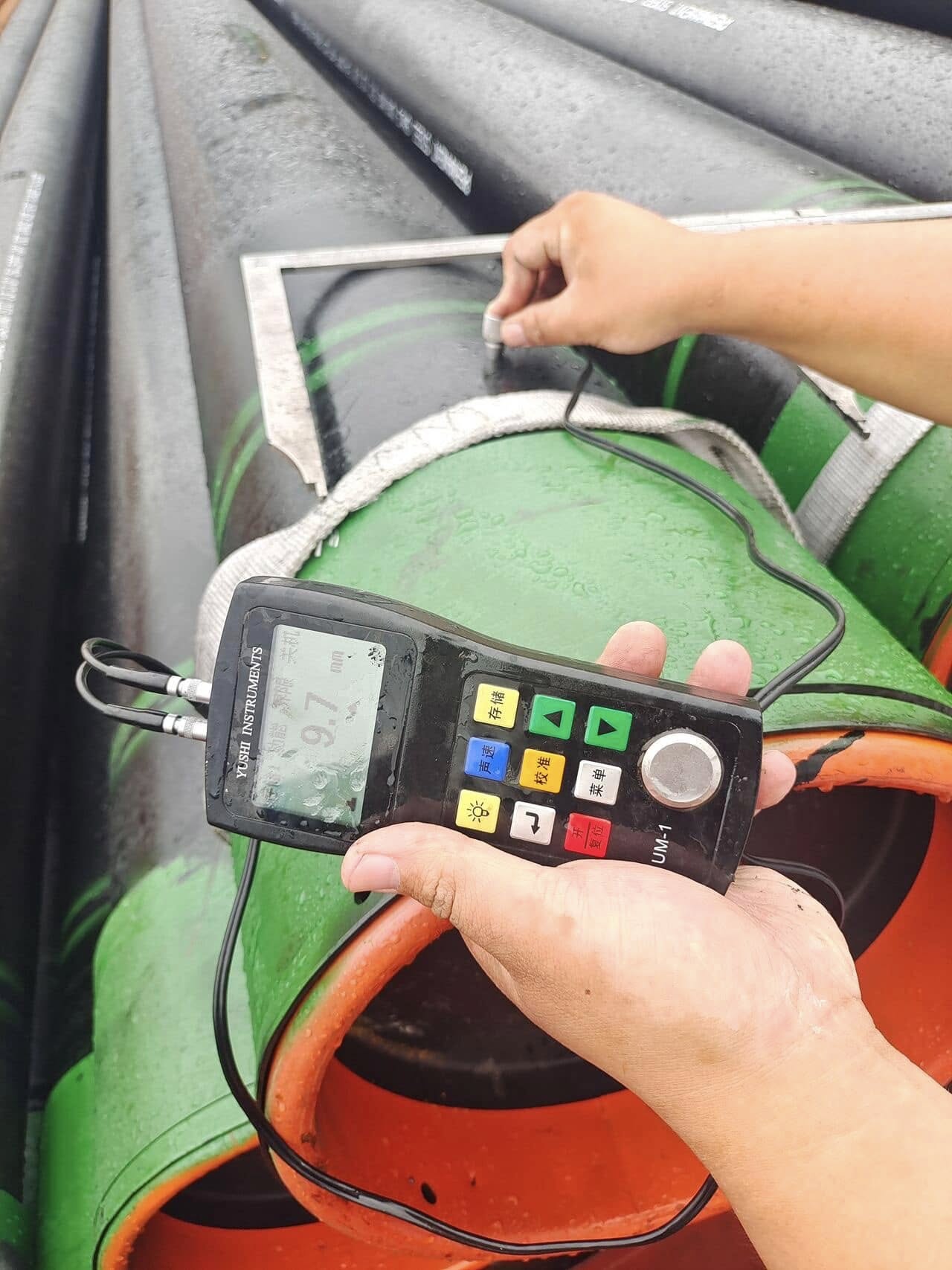
Inspection: hydrostatic test, EMI or UT coverage, and whether re-drift after coupling is required
Certificate to EN 10204 3.1 or 3.2, plus API monogram and the hardness test record for L80, C90 or T95
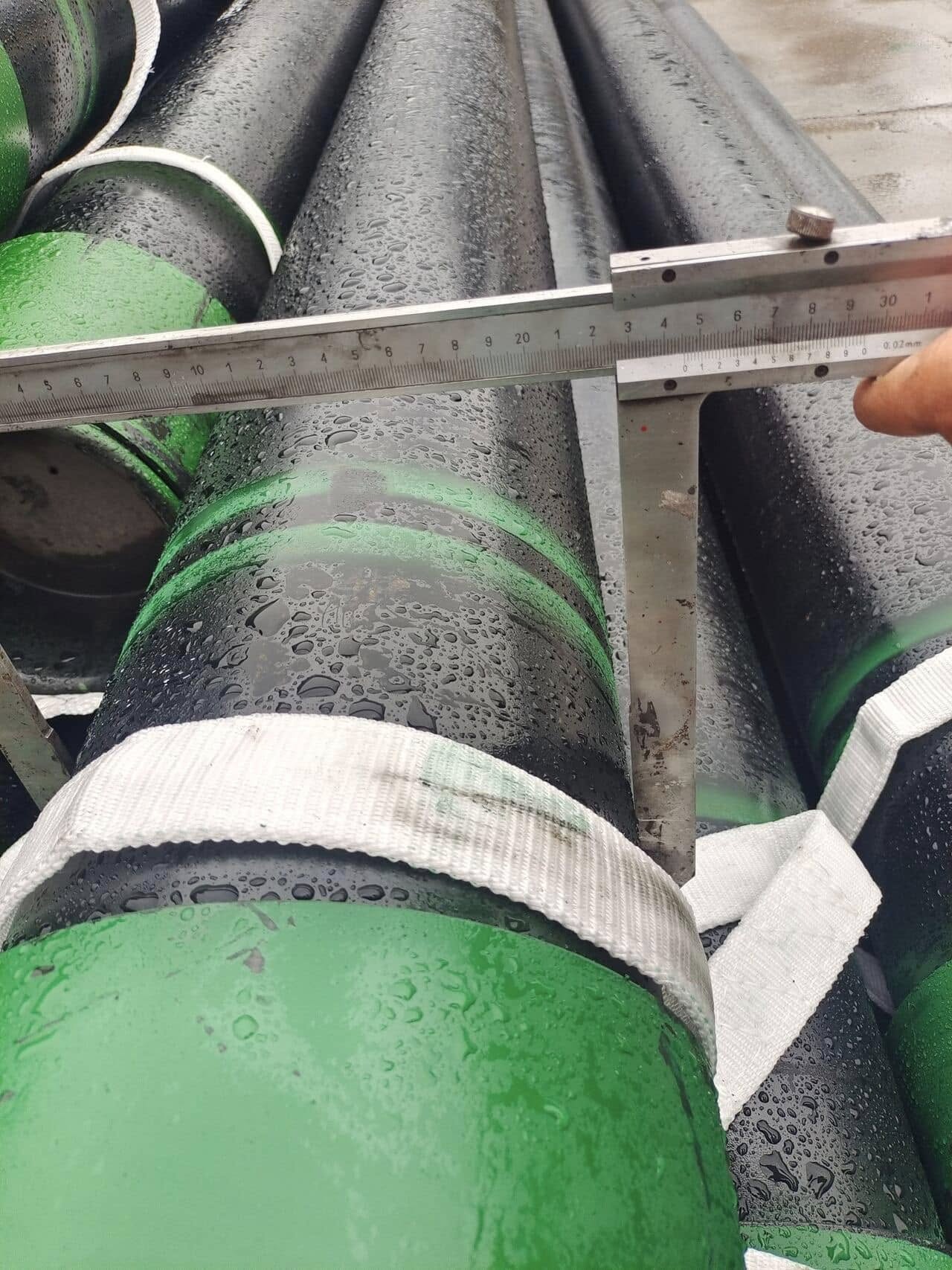
Two of those lines are the ones that get left out and then argued about. The drift line, because a catalog value is not a purchase requirement; and the re-drift line, because a string that was drift-tested in the plain-end condition is not a string that has been proved to pass a tool once the couplings are made up. On arrival, check the joint rather than the paperwork: pass the drift mandrel over the full length, measure wall at both ends, verify coupling outside diameter and make-up against API 5B, and match the stencil and heat number to the certificate. A 2-7/8 joint is light enough to handle by hand, which is exactly why a wrong one reaches the rig floor before anyone notices.
Send the tally and the tonnage is worked out for you.
Tubing test and inspection
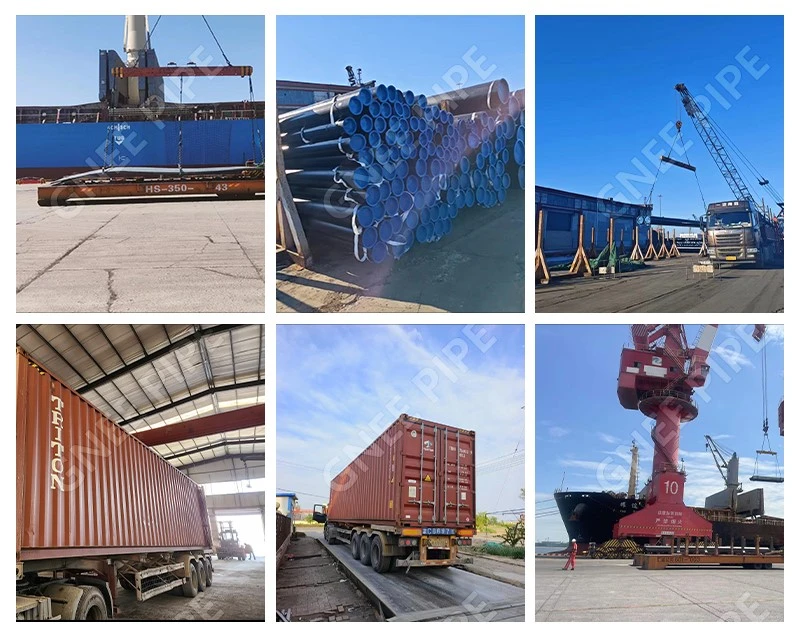
packaging and shipping
Related Product
FAQ
What does the 2.875 in. in a 2-7/8 oilfield pipe measure?
It is the nominal outside diameter in decimal form: 2-7/8 in. equals 2.875 in., which is 73.02 mm. It is not the bore and not a thread size. The bore follows from the weight designation, so the same 73.02 mm body carries a 62.00 mm bore at 6.40 lb/ft and a 55.74 mm bore at 9.35 lb/ft.
Why does the same 2-7/8 joint appear as 6.40 lb/ft on one list and 6.50 lb/ft on another?
Because one list is quoting non-upset and the other external-upset pipe. The upset forges extra metal at both ends to restore joint strength, and that metal is counted in the nominal weight, so EU is about 0.10 lb/ft heavier than NU at every rung of the ladder. The two are separate line items: 6.40 means NU and 6.50 means EU, and a quote against the wrong one is a substitution question, not a rounding difference.
Is there such a thing as 2-7/8 casing?
Not in API 5CT. The casing size range begins at 4-1/2 in., so a requirement written as 2-7/8 casing is either a tubing line described with the wrong noun or a typing error. Ask before quoting, because the two products differ in coupling, drift, wall schedule and price, and the pipe that arrives for a casing order at this diameter will be tubing.
Does 2-7/8 tubing have a fixed drift diameter?
It has a tabulated one rather than a free choice. API 5CT Table C.23 deducts 2.38 mm from the inside diameter for sizes up to and including 2-7/8, which gives 59.62 mm at 6.40 lb/ft and 53.36 mm at 9.35 lb/ft. Where a tool needs more than that, the requirement has to be written on the purchase order as a controlled drift, because the catalog value is what the mill guarantees by default, not what a completion may need.
What is the difference between 2-7/8 NU and 2-7/8 EU when the two are quoted at the same grade?
The pipe end and the coupling. NU threads the pipe body directly and produces a smaller coupling, 88.90 mm, with a joint that is weaker than the body. EU upsets the ends before threading, which brings joint strength close to body strength but grows the coupling to 93.17 mm. On a 2-7/8 string inside a 4-1/2 in. 12.60 lb/ft casing with a 3.833 in. drift, that is the difference between roughly 8.5 mm and 4.2 mm of diametral clearance, before anything else is put in the annulus.
Can a 2-7/8 string be supplied with a premium connection instead of a coupling?
Yes, as a separate product rather than a variant of the API one. Integral-joint and premium gas-tight connections are machined to the connection manufacturer's drawings, carry their own make-up torque and are qualified by that manufacturer's test protocol rather than by API 5B. The pipe body underneath is the same 73.02 mm tube, so the weight and grade ladder still applies; what changes is the connection, its outside diameter and often the delivery lead time.