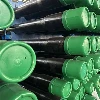
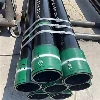
A well conductor casing and a well surface casing are the first two concentric steel strings set in an oil or gas well, and they are often confused because both are short, large-diameter and near the top of the hole. They are not interchangeable. The conductor is the outermost, shallowest string that stabilizes unconsolidated ground and carries the wellhead; the surface string is run inside it to isolate freshwater aquifers and to anchor the blowout preventer. This article compares conductor casing vs surface casing across function, diameter, setting depth, governing standard, cement job and purchase specification, so a buyer can tell which string a line item actually refers to.
What Is Conductor Casing? The Outermost String
So, what is conductor casing? It is the first and largest-diameter pipe run into a well, set at shallow depth before the deeper hole is drilled. It is also called conductor pipe. Its function is to stabilize loose near-surface formations, isolate shallow water sands, carry the wellhead and surface equipment, and return drilling fluid to the mud pit during the top-hole section. Because it is not asked to contain significant pressure, it is often a heavy-wall welded tube or a large-diameter line pipe rather than a high-grade OCTG product.
Where the Well Conductor Casing Fits in the Casing Programme
A well conductor casing string is installed by one of three methods: driving it into soft ground with a pile hammer, drilling an oversized hole and cementing the pipe in place, or jetting it into soft seabed on offshore locations. The method follows the formation and the load. Reference products such as API 5L Grade B line pipe and API 5L X52 line pipe illustrate the line-pipe route, while API 5CT H40 casing shows the low-grade OCTG option for heavier duties.
| Attribute | Typical range / description | Why it matters |
|---|---|---|
| Outside diameter | About 16–36 in (406–914 mm) | Must clear every string run inside it |
| Setting depth | Shallow, roughly tens to a few hundred feet | Only the loose top interval is isolated |
| Material basis | API 5L line pipe or low-grade API 5CT | Structural duty, not pressure containment |
| Installation | Driven, drilled and cemented, or jetted | Chosen to suit formation strength |
| Cement | Usually cemented to surface or to the mudline | Seals the shallow annulus and supports the pipe |
Ranges are indicative of common practice. The well design and the applicable regulations set the actual conductor diameter, depth and cement programme.
Conductor Casing Sizes and How They Are Chosen
Conductor casing sizes are driven by what must fit inside. Because every later string is smaller, the conductor is the largest diameter in the well: land wells commonly start around 20 or 24 inches, while offshore and deepwater wells move to 26, 30 or even 36 inches to leave room for several nested strings and larger wellhead equipment. Wall thickness is selected for driving and collapse loads rather than for internal pressure.
| Nominal OD (in) | Nominal OD (mm) | Where typically used | Selection note |
|---|---|---|---|
| 16 | 406.4 | Small land wells, shallow conductor | Lower material and handling cost |
| 20 | 508.0 | Common land-well conductor | Standard wellhead and BOP interface |
| 24 | 609.6 | Land and shallow offshore | Extra clearance for the surface string |
| 26 | 660.4 | Offshore platforms | Larger top-hole and wellhead envelope |
| 30 | 762.0 | Offshore and deepwater | Supports multiple nested strings |
| 36 | 914.4 | Deepwater subsea | jetting installation in soft seabed |
Diameters show common nominal outside diameters; wall thickness and weight are set by the well design. Confirm the exact size, wall and connection before requesting a quote.
What Is Surface Casing? The Freshwater Barrier
So, what is surface casing? It is the second string in a well, run inside the conductor after the shallow hole has been drilled past the deepest freshwater aquifer. Its primary job is environmental: it seals off shallow water zones so that drilling and completion fluids cannot contaminate them. A second job is structural - the blowout preventer stack is landed on the surface casing, so the string and its cement must be able to carry well-control loads.
How the Well Surface Casing Is Specified and Cemented
Because it is a permanent pressure-related barrier, a well surface casing string is normally OCTG supplied to API 5CT / ISO 11960 with a specified grade and API connection. Common grade families are H40, J55 and K55, selected against collapse and tension loads; reference products include API 5CT J55 casing and API 5CT K55 well drilling casing. The string is cemented from its shoe back to surface, and regulators commonly require the cement bond or pressure test to be accepted before the next hole section is opened.
Surface Casing Sizes and Setting Depth
Surface casing sizes are the first step down from the conductor and are chosen so the string fits inside the conductor with an annulus wide enough for a competent cement sheath. In land wells 13-3/8 and 9-5/8 inch surface strings are widespread; larger 20 inch surface strings appear where the wellhead load or the number of later strings demands it. Setting depth is governed by the depth of the deepest protected freshwater zone and by local regulation, not by the pipe supplier.
| Nominal OD (in) | Nominal OD (mm) | Typical setting | Governing consideration |
|---|---|---|---|
| 20 | 508.0 | Large surface string in deep or heavy-load wells | Fits inside a larger conductor |
| 13-3/8 | 339.7 | Common land and offshore surface string | Often set past deepest freshwater zone |
| 10-3/4 | 273.0 | Surface string in moderate-diameter programmes | Balance of clearance and material cost |
| 9-5/8 | 244.5 | Smaller surface string, deeper setting | Leaves room for intermediate strings |
Setting depths vary widely with aquifer depth and local rules. The figures describe practice, not a design value; the casing programme and regulator set the actual depth and cement top.
Conductor Casing vs Surface Casing: Side by Side
The fastest way to separate the two is to compare them on the axes that change the purchase order: position in the well, diameter, governing standard, setting depth, function and cement scope. The table below places conductor casing vs surface casing against the same set of questions.
| Criterion | Conductor casing | Surface casing |
|---|---|---|
| Position | Outermost, first string set | Inside the conductor, second string |
| Typical OD | About 16–36 in | About 9-5/8–20 in |
| Setting depth | Shallow, tens to a few hundred feet | Deeper, past the deepest freshwater zone |
| Primary function | Stabilize top hole; support wellhead | Isolate freshwater; anchor BOP |
| Pressure role | Not a pressure-containing string | Well-control and environmental barrier |
| Standard | Often API 5L / ISO 3183; sometimes API 5CT | API 5CT / ISO 11960 OCTG |
| Cement | To surface or to the mudline | From shoe to surface, tested |
| Installation | Driven, drilled and cemented, or jetted | Run and cemented in a drilled hole |
Both strings are permanent once cemented, so a specification error is expensive to correct. The two are bought together in a casing programme: the conductor size fixes the maximum surface size, and the surface size fixes the clearance available for every string below. Treat the pair as one nested system when reviewing a quote.
Buyer Checklist for Each String
A comparable quotation for either string starts with the same core fields - outside diameter, nominal weight or wall, grade or material specification, connection, length range and quantity - but the two strings add different details on top. Getting these fields right is what distinguishes a conductor casing line from a surface casing line on a purchase order.
| Field | Conductor casing | Surface casing |
|---|---|---|
| Diameter and wall | OD and heavy wall for driving loads | OD and wall for collapse/tension |
| Material | API 5L line pipe or specified OCTG grade | API 5CT grade, e.g. H40 / J55 / K55 |
| Connection | Often plain end, weld-on or simple thread | STC / LTC / BTC per API 5B |
| Length range | Specified joint length and quantity | API 5CT R1 / R2 / R3 range |
| Certification | MTC to EN 10204 3.1; standard conformity | MTC 3.1/3.2; API 5CT and thread gauging |
| Scope notes | Installation method and cement provision | Cement top and test requirements |
Insist on a mill test certificate traceable to the delivered heat and on evidence of the stated standard, whether API 5L / ISO 3183 for a line-pipe conductor or API 5CT / ISO 11960 for an OCTG surface string. Where sour service or low-temperature duty applies, add the relevant supplementary requirement to the order so it is reflected in both the material and the documentation.
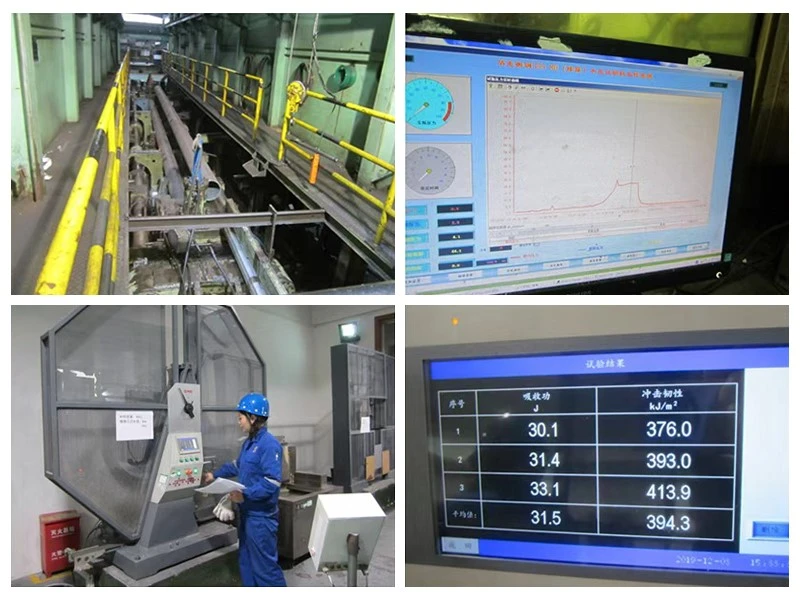
casing test and inspection
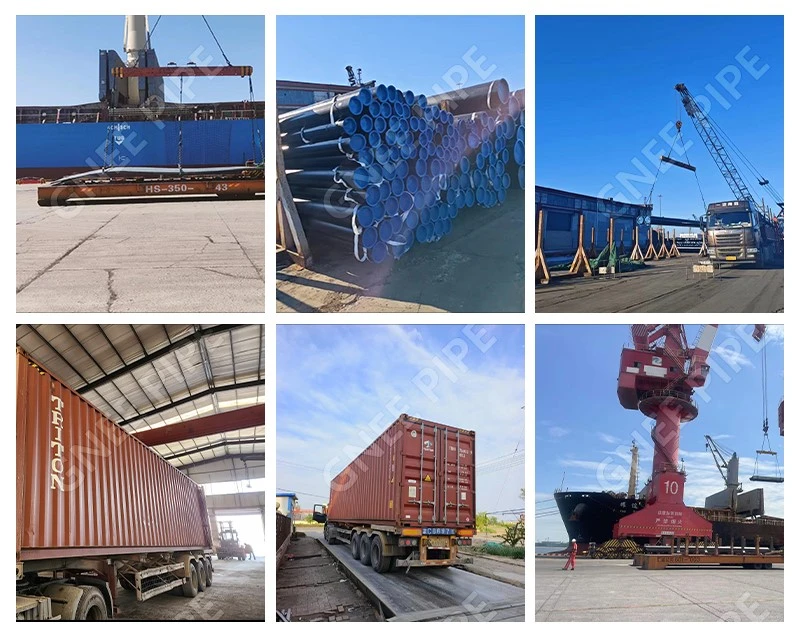
API 5CT casing packaging and shipping
If you have the casing programme - the outside diameter, wall or weight, material grade, connection, length range and quantity for each string - send it with the destination and the required certificate scope. A quotation can then be built against the exact conductor and surface casing line instead of a generic catalogue price, and the standard and documentation can be confirmed before the order is placed.
View casing products
FAQ
Which string comes first, conductor casing or surface casing?
The conductor casing comes first. It is set in the shallow, often unconsolidated ground before the surface hole is drilled deep enough for the next string. Once the conductor is in place and the shallow interval has been drilled, the surface casing is run inside it and cemented. In a typical land well the order is conductor, then surface, then any intermediate and production strings.
What is conductor casing used for if it does not contain pressure?
The conductor is not designed as a pressure-containing string. Its jobs are structural and isolation-related: it stops near-surface soil and gravel from caving into the hole, isolates shallow water sands, holds the weight of the wellhead and drilling equipment, and provides a return path for drilling fluid during the top-hole section. In offshore wells it is also the foundation that the wellhead and subsequent strings land on.
Why is surface casing cemented all the way back to surface?
Surface casing is the regulatory barrier between the well and underground sources of drinking water. It is set below the deepest freshwater aquifer and cemented from the shoe to surface so that drilling fluid, hydrocarbons or later completion fluids cannot migrate up behind the pipe into the aquifer. Most jurisdictions also require a pressure or bond test on this cement job before drilling continues.
Are conductor casing sizes the same as surface casing sizes?
No. Conductor casing sizes are much larger because the conductor is the outermost string and must clear everything run inside it; surface casing sizes are the next step down so the surface string fits inside the conductor with room for cement. A conductor of 20 or 30 inches typically carries a surface string around 13-3/8 or 9-5/8 inches. Confirming the nesting order is the first check on any casing programme.
Is conductor casing supplied to API 5CT like surface casing?
Not always. Surface casing is OCTG and is normally bought to API 5CT / ISO 11960 with a defined grade and connection. Much conductor casing is supplied as large-diameter line pipe to API 5L / ISO 3183, or as a heavy-wall welded tube, because its duty is structural rather than pressure containment. High-load or deepwater conductors may call for API 5CT material. The governing standard must be stated on the order rather than assumed.
Can surface casing be set without a conductor?
In some firm, stable near-surface formations and in certain shallow or water-well constructions a separate conductor may be omitted, with the surface string cemented directly. On most oil and gas wells, and wherever the topsoil is loose or the wellhead carries significant load, a conductor is installed first. The decision belongs to the well design, not to the pipe supplier, and it changes the size and quantity of both strings.
What should an enquiry state to get a comparable quote for each string?
For either string, state the outside diameter, nominal weight or wall thickness, grade or material specification, connection type, length range and quantity. For conductor casing add whether the material is API 5L line pipe or API 5CT OCTG and how it will be installed. For surface casing add the API 5CT grade, thread type and the required cement and test scope. Quotes compared on diameter alone are not comparable.
Do conductor and surface casing use the same steel grade?
They can overlap but are selected differently. Surface casing commonly uses API 5CT grades such as H40, J55 or K55, chosen for collapse and tensile loads with a grade suited to the well. Conductor material is selected more for wall thickness and driving or cementing loads, and is often a line-pipe grade or a low OCTG grade. Grade should be confirmed against the well design and the governing standard for each string separately.